College of Sciences

Latest News

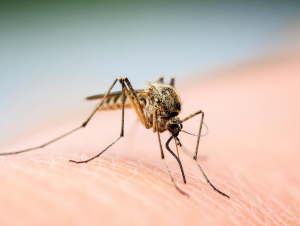
A female mosquito lands on a human.

Researchers have visualized mosquito flight behavior for the first time — which could improve mosquito-control strategies. 
Amino Acids

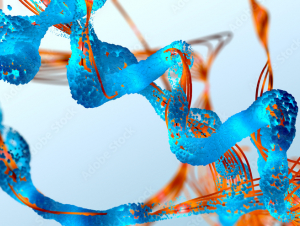
Georgia Tech researchers have developed a breakthrough system to manufacture valuable amino acids. It’s the most efficient system of its kind — and removes more carbon from the atmosphere than it emits.
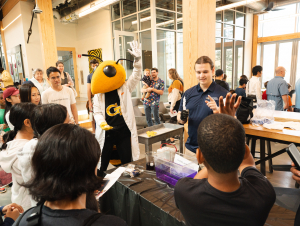
2026 Celebrate STEAM

Over 50 demonstrations took place throughout the day, and guest speakers shared insights into how STEAM is shaping the future.  
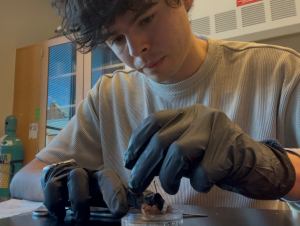
Luis Delgado

Because of Tech Promise, Luis Delgado and Nick Fabrizio were able to dream big and set their sights on Georgia Tech.
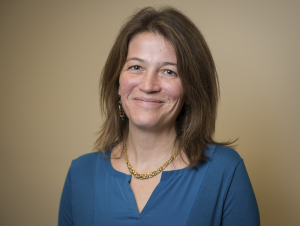
Laura Cadonati

Laura Cadonati, professor in the School of Physics and associate dean for Research in the College of Sciences, has been elected to the Board of Directors of the American Physical Society.

Smole Stack from Adobe

The researchers suggest that carbon removal can have clear benefits on the road to reducing greenhouse gas emissions, but it needs more oversight to be responsibly adopted at large scales.
Experts In The News

Alex Robel, an associate professor in the School of Earth and Atmospheric Sciences at Georgia Tech, said pumping sand onshore is far from a perfect solution to stabilize a beach, but it’s “one of the best tools we have in our arsenal.”

“It’s been done in the United States for almost a century in different places and we know how to do it,” Robel said. “We’re good at it.”

But nourishment is only a Band-Aid for erosion. Once cities start replenishing sand, Robel said they have to keep doing it regularly. 

Atlanta Journal Constitution March 24, 2026

A team of researchers including David Hu, a professor in Georgia Tech’s School of Biological Sciences and George W. Woodruff School of Mechanical Engineering, have visualized mosquito flight behavior for the first time.

Based on their data, the researchers said they don’t think mosquitoes swarm because they’re following the pack. Each appeared to pick up on the cues independently, then found themselves at the same place at the same time.

“It’s like a crowded bar,” said Hu. “Customers aren’t there because they followed each other into the bar. They’re attracted by the same cues: drinks, music, and the atmosphere. The same is true of mosquitoes. Rather than following the leader, the insect follows the signals and happens to arrive at the same spot as the others. They’re good copies of each other.”

A similar story was published by The Economic Times.

ScienceDaily March 22, 2026

Upcoming Events

Apr
01
2026
Featuring Sarah Bergbreiter - Professor, Associate Head for Strategic Initiatives, Mechanical Engineering @ CMU
Apr
02
2026
From satellites and rovers to bold visions for human exploration, this year’s program brings together more than two dozen leading scientists, engineers, and thought leaders who are pushing the boundaries of what lies beyond.
Apr
02
2026
In this hands-on workshop we will discuss how to transform your research into a clear and compelling poster.
Apr
02
2026
On the grounds between the Howey and Mason Buildings, several telescopes are typically set up for viewing, and visitors are also invited to bring their own telescope.
Apr
02
2026
On the grounds between the Howey and Mason Buildings, several telescopes are typically set up for viewing, and visitors are also invited to bring their own telescope.

Spark: College of Sciences at Georgia Tech

Welcome — we're so glad you're here. Learn more about us in this video, narrated by Susan Lozier, College of Sciences Dean and Betsy Middleton and John Clark Sutherland Chair.