
College of Sciences

Latest News

David-Sherrill-for-Ex-Dir-Bio-Page.jpg

Georgia Tech has appointed David Sherrill as executive director of the Institute for Data Engineering and Science (IDEaS), effective March 1. Sherrill is a Regents' Professor in the School of Chemistry and Biochemistry with a joint appointment in the School of Computational Science & Engineering. Sherrill has served as associate director for IDEaS since its founding in 2016 and as interim director since January 1, 2025. 
nai.jpg.png

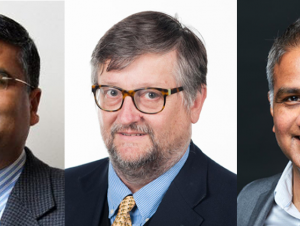
The professors have been recognized for patenting and commercializing technologies with real-world impact. 
Miller Templeton

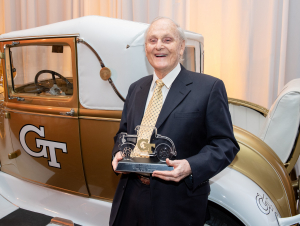
Templeton has dedicated six decades to Georgia Tech — as a student, administrator, and volunteer — demonstrating an enduring commitment to his beloved alma mater.

Generating Buzz: A Protein-Packed Industry

In the latest episode of Generating Buzz, Lesley Baradel explores the high-protein food craze and explains how the rise of GLP-1s factors into the increased focus on this essential macronutrient. 
Students participate in the Plant Library.

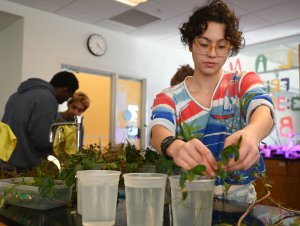
The Plant Library enables the campus community to learn environmental concepts, unwind, and help new plants take root. 
Lynn Kamerlin
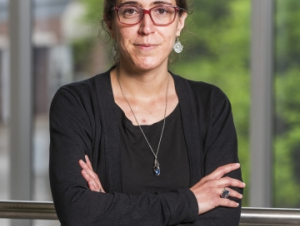
It is the highest degree of membership awarded by the society. "I look forward to giving back to the physics community, supporting the mission of the society, and working to remind the next generation that physics is for everyone," says Kamerlin.

Experts In The News

Alex Robel, an associate professor in the School of Earth and Atmospheric Sciences at Georgia Tech, said pumping sand onshore is far from a perfect solution to stabilize a beach, but it’s “one of the best tools we have in our arsenal.”

“It’s been done in the United States for almost a century in different places and we know how to do it,” Robel said. “We’re good at it.”

But nourishment is only a Band-Aid for erosion. Once cities start replenishing sand, Robel said they have to keep doing it regularly. 

Atlanta Journal Constitution March 24, 2026

A team of researchers including David Hu, a professor in Georgia Tech’s School of Biological Sciences and George W. Woodruff School of Mechanical Engineering, have visualized mosquito flight behavior for the first time.

Based on their data, the researchers said they don’t think mosquitoes swarm because they’re following the pack. Each appeared to pick up on the cues independently, then found themselves at the same place at the same time.

“It’s like a crowded bar,” said Hu. “Customers aren’t there because they followed each other into the bar. They’re attracted by the same cues: drinks, music, and the atmosphere. The same is true of mosquitoes. Rather than following the leader, the insect follows the signals and happens to arrive at the same spot as the others. They’re good copies of each other.”

A similar story was published by The Economic Times.

ScienceDaily March 22, 2026

Upcoming Events

Apr
01
2026
Featuring Sarah Bergbreiter - Professor, Associate Head for Strategic Initiatives, Mechanical Engineering @ CMU
Apr
02
2026
From satellites and rovers to bold visions for human exploration, this year’s program brings together more than two dozen leading scientists, engineers, and thought leaders who are pushing the boundaries of what lies beyond.
Apr
02
2026
In this hands-on workshop we will discuss how to transform your research into a clear and compelling poster.
Apr
02
2026
On the grounds between the Howey and Mason Buildings, several telescopes are typically set up for viewing, and visitors are also invited to bring their own telescope.
Apr
02
2026
On the grounds between the Howey and Mason Buildings, several telescopes are typically set up for viewing, and visitors are also invited to bring their own telescope.

Spark: College of Sciences at Georgia Tech

Welcome — we're so glad you're here. Learn more about us in this video, narrated by Susan Lozier, College of Sciences Dean and Betsy Middleton and John Clark Sutherland Chair.