College of Sciences

Latest News

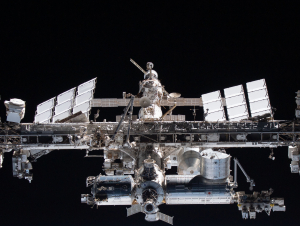
Solar cells account for approximately six percent of the electricity used on Earth; however, in space, they play a significantly larger role, with nearly all satellites relying on advanced solar cells for their power. That’s why Georgia Tech researchers will soon send 18 photovoltaic cells to the International Space Station for a study of how space conditions affect the devices’ operation over time.
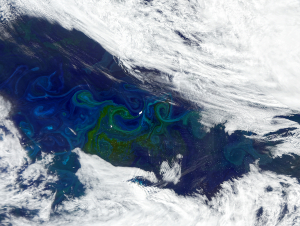
A satellite image of blooming phytoplankton, visible as green-tinted swirls, in the South Atlantic. Credit: NASA Credit: NASA (OCI sensor aboard PACE on January 5, 2025)

Ocean waters are getting greener at the poles and bluer toward the equator, according to an analysis of satellite data published in Science. The change reflects shifting concentrations of chlorophyll made by phytoplankton. If the trend continues, marine food webs could be affected, with potential impacts on fisheries near the equator and carbon sequestration near the poles.
54370792577_4e391512ec_k.jpg

The mass spectrometer and ice drill will be crucial to future NASA missions. 
Double-strand breaks in DNA can be deadly

Insights could not only pave the way for new treatment strategies for genetic disorders, cancer and neurodegenerative diseases, but also enhance gene-editing technologies.
Members of Pengfei Liu’s research team

Georgia Tech researchers are innovating ways to study air quality — beginning with prehistoric insights and zooming all the way to satellites in our orbit.
Summer Hydration

As temperatures rise, proper hydration and heat acclimatization can help maintain physical and mental health. School of Biological Sciences Professor Mindy Millard-Stafford and Adjunct Professor Mike Sawka discuss best practices and strategies to avoid heat-related illness and dehydration while optimizing performance.
Experts In The News

Alex Robel, an associate professor in the School of Earth and Atmospheric Sciences at Georgia Tech, said pumping sand onshore is far from a perfect solution to stabilize a beach, but it’s “one of the best tools we have in our arsenal.”

“It’s been done in the United States for almost a century in different places and we know how to do it,” Robel said. “We’re good at it.”

But nourishment is only a Band-Aid for erosion. Once cities start replenishing sand, Robel said they have to keep doing it regularly. 

Atlanta Journal Constitution March 24, 2026

A team of researchers including David Hu, a professor in Georgia Tech’s School of Biological Sciences and George W. Woodruff School of Mechanical Engineering, have visualized mosquito flight behavior for the first time.

Based on their data, the researchers said they don’t think mosquitoes swarm because they’re following the pack. Each appeared to pick up on the cues independently, then found themselves at the same place at the same time.

“It’s like a crowded bar,” said Hu. “Customers aren’t there because they followed each other into the bar. They’re attracted by the same cues: drinks, music, and the atmosphere. The same is true of mosquitoes. Rather than following the leader, the insect follows the signals and happens to arrive at the same spot as the others. They’re good copies of each other.”

A similar story was published by The Economic Times.

ScienceDaily March 22, 2026

Upcoming Events

Apr
03
2026
Join the Spatial Ecology and Paleontology Lab for Fossil Fridays! Become a fossil hunter and help discover how vertebrate communities have changed through time.
Apr
03
2026
EAS 1600 students maintain the Library, and it's open to everyone on Fridays from 3:30 - 4:30 pm when classes are in session. Come learn about houseplants and bring your own plant home!
Apr
08
2026
Featuring | Jessy Li - Associate Professor Department of Lingustics & Department of Computer Science, UT Austin
Apr
08
2026
Join attendees from universities around Atlanta for an evening of data-blitz talks, undergraduate poster presentations and catered networking with students and faculty from the Atlanta neuroscience community.
Apr
08
2026
This signature networking event brings together College of Sciences students and distinguished Georgia Tech alumni for an evening of relationship building and professional discovery.

Spark: College of Sciences at Georgia Tech

Welcome — we're so glad you're here. Learn more about us in this video, narrated by Susan Lozier, College of Sciences Dean and Betsy Middleton and John Clark Sutherland Chair.