College of Sciences

Latest News

17C1001-P7-047-Web-Use---1-000px-Wide.jpg

Georgia Tech Researchers Among World’s Most Highly Cited in 2025
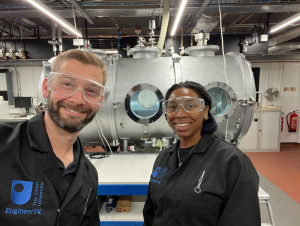
Jacob Adler (left) and Sharissa Thompson (right) conducting research.

New research is showing that atmospheric pressure shifts dramatically altered how mud and water flowed on Mars — sometimes boiling, sometimes freezing — offering fresh clues to reconstruct the planet's ancient climate and habitability.
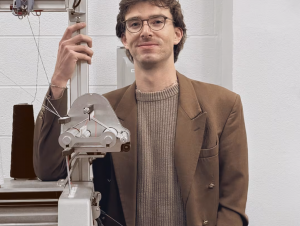
Alexander Cachine

Cachine was selected for his work in solving modern medical challenges using ancient textile techniques. 
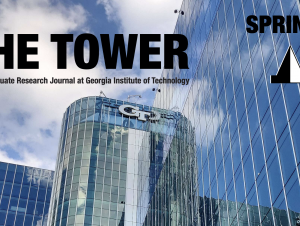
The Tower, Spring 2025 Edition

The Tower, Georgia Tech’s undergraduate research journal, is seeking submissions from students across all disciplines who want to have their work published in a campuswide platform. 

Professor Randall W. Engle

Professor Engle’s research centers on the nature of our ability to maintain attention and focus in the face of external and internal distractions. His pioneering work has influenced a wide range of fields and contributed to modern theories of cognitive and emotional control.
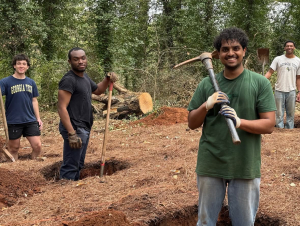
Benjamin Manoj (front) and other Yellow Jackets Against Poverty members dig holes for the foundation of a new homeless shelter.

Fighting poverty and fostering kindness, the student-led Yellow Jackets Against Poverty Club makes a hands-on difference in the lives of those in need. 
Experts In The News

Alex Robel, an associate professor in the School of Earth and Atmospheric Sciences at Georgia Tech, said pumping sand onshore is far from a perfect solution to stabilize a beach, but it’s “one of the best tools we have in our arsenal.”

“It’s been done in the United States for almost a century in different places and we know how to do it,” Robel said. “We’re good at it.”

But nourishment is only a Band-Aid for erosion. Once cities start replenishing sand, Robel said they have to keep doing it regularly. 

Atlanta Journal Constitution March 24, 2026

A team of researchers including David Hu, a professor in Georgia Tech’s School of Biological Sciences and George W. Woodruff School of Mechanical Engineering, have visualized mosquito flight behavior for the first time.

Based on their data, the researchers said they don’t think mosquitoes swarm because they’re following the pack. Each appeared to pick up on the cues independently, then found themselves at the same place at the same time.

“It’s like a crowded bar,” said Hu. “Customers aren’t there because they followed each other into the bar. They’re attracted by the same cues: drinks, music, and the atmosphere. The same is true of mosquitoes. Rather than following the leader, the insect follows the signals and happens to arrive at the same spot as the others. They’re good copies of each other.”

A similar story was published by The Economic Times.

ScienceDaily March 22, 2026

Upcoming Events

Apr
02
2026
From satellites and rovers to bold visions for human exploration, this year’s program brings together more than two dozen leading scientists, engineers, and thought leaders who are pushing the boundaries of what lies beyond.
Apr
02
2026
In this hands-on workshop we will discuss how to transform your research into a clear and compelling poster.
Apr
02
2026
On the grounds between the Howey and Mason Buildings, several telescopes are typically set up for viewing, and visitors are also invited to bring their own telescope.
Apr
02
2026
On the grounds between the Howey and Mason Buildings, several telescopes are typically set up for viewing, and visitors are also invited to bring their own telescope.
Apr
03
2026
Join the Spatial Ecology and Paleontology Lab for Fossil Fridays! Become a fossil hunter and help discover how vertebrate communities have changed through time.

Spark: College of Sciences at Georgia Tech

Welcome — we're so glad you're here. Learn more about us in this video, narrated by Susan Lozier, College of Sciences Dean and Betsy Middleton and John Clark Sutherland Chair.