To request a media interview, please reach out to experts using the faculty directories for each of our six schools, or contact Jess Hunt-Ralston, College of Sciences communications director. A list of faculty experts is also available to journalists upon request.
Latest News
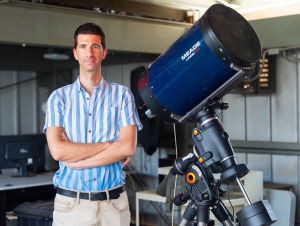
The College of Sciences has named Paul Sell as the new director of the Georgia Tech Observatory. Sell joined the Institute in Fall 2025 as a senior academic professional in the School of Physics.
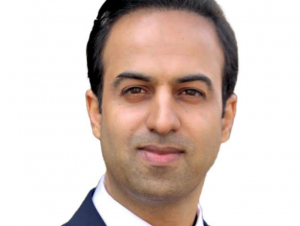
Ali Sarhadi's research draws on the intersection of engineering, physics-based modeling, and AI, reflecting Georgia Tech’s broad strengths in climate resilience and computational science.
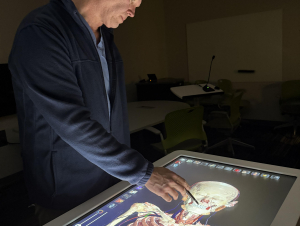
Georgia Tech’s new Anatomage Table blends traditional dissection with digital technology — preparing students for the future of medicine.
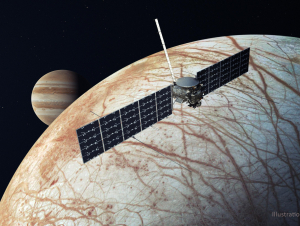
In four years, NASA's Europa Clipper mission will arrive in Jupiter’s orbit to investigate whether the planet’s icy moon, Europa, could support life. In the interim, Professor Sven Simon is working to uncover critical information to support the rapid analysis of measurements from the mission.
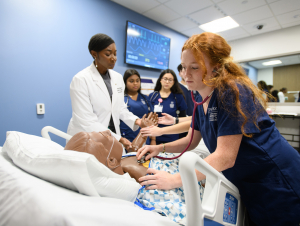
Georgia Tech and the Nell Hodgson Woodruff School of Nursing at Emory University are partnering to develop a pipeline that prepares more local nurses to meet workforce demands.
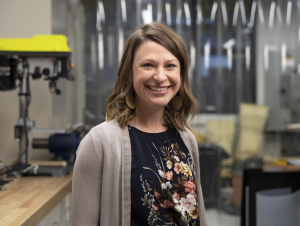
Growing up in rural southwest Georgia, Kinsey Herrin loved “making stuff.” She loved it so much that she regularly dug up muddy clay from her family’s property and the surrounding area to make ceramics. As a prosthetist/orthotist, she creates and tests devices that help patients improve or regain mobility — from prosthetic limbs to braces of all kinds. But Herrin’s role at the Institute is even more expansive. She’s at the epicenter of a research community where medical devices, studies, data, patients, clinicians, and students collide.