Latest News

To request a media interview, please reach out to experts using the faculty directories for each of our six schools, or contact Jess Hunt-Ralston, College of Sciences communications director. A list of faculty experts is also available to journalists upon request.

GT NEXT 2025 Recipients

The Office of Technology Licensing has announced the 2025 recipients of the GT NEXT awards, a grant that helps students advance their inventions toward market readiness. Providing early momentum for promising technologies, the grants help students move their research toward real-world impact. 

Tiny helices emerge during a phase separation process, offering clues about how life's building blocks may have first developed a preference for one 'handed' form over another. (Credit: Jong-Hoon Lee, Ziming Wang, Ying Diao)

A new study reveals that many conjugated polymers, long considered structurally neutral, can spontaneously twist into chiral shapes. This surprising behavior, overlooked for decades, could pave the way for development of a new class of energy-efficient electronics inspired by nature. Collaborative findings across University of Illinois Urbana-Champaign, Georgia Tech, University of North Carolina, and Purdue University are published in the Journal of the American Chemical Society.

A lizard wearing one of the sensors, which weigh just three-hundredths of a gram each — the same as a two grains of rice. (Credit: Jon Suh)

The award will support Stroud as he creates evolution’s first high-definition map — with the help of 1,000 backpack-wearing lizards.

Wheaton.jpg

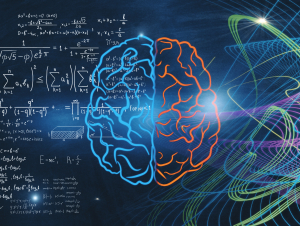
Neuroscience experts from across Georgia Tech will soon come together for a new interdisciplinary research institute, the Institute for Neuroscience, Neurotechnology, and Society (INNS), launched in July. Faculty in INNS are helping to solve some of neuroscience’s most pressing problems, and many have promising medical applications. One important aspect of studying the brain is understanding how the brain and the body work together. Meet the researchers who study brain-body interactions, from monitoring the neuron degradation that causes Alzheimer’s to enhancing mobility for stroke survivors, in an effort to improve the health and quality of life for millions of Americans.

Grace Tang (Left) and Alison Onstine (Right) holding bacteria plates that spell "BIOL 4590" (Credit: Tang and Onstine)

“This course truly underscores Georgia Tech’s commitment to pioneering meaningful undergraduate experiences,” says teacher Vinayak (Vinny) Agarwal. “No other peer institution I know of is exposing undergraduates to bioinformatics at this level.”

Post-hurricane flooding inundates residential areas and transportation infrastructure, with low-lying terrain overwhelmed by storm surge and excessive rainfall.

Georgia Tech researchers are developing solutions to monitor and forecast flooding, as well as restore ecosystems to prevent future flooding. These efforts support communities’ resilience in the face of climate change and keep the U.S. secure.