To request a media interview, please reach out to experts using the faculty directories for each of our six schools, or contact Jess Hunt-Ralston, College of Sciences communications director. A list of faculty experts is also available to journalists upon request.
News Center
Latest News

Neurosciences research holds enormous potential for wide-ranging health and societal impact, and Georgia Tech’s culture of applied research and integrated interdisciplinary liberal arts scholarship is uniquely positioned to create the environment in which Neuro Next can become an international leader in the discovery, innovation, and translation in neuroscience and neurotechnology.

Each year, exposure to airborne particulate matter known as PM2.5 (particles with a diameter smaller than 2.5 micrometers) leads to millions of premature deaths worldwide. Organic aerosols are the dominant constituents of PM2.5 in many locations around the world. Historically, the chemical complexity of organic aerosols has made it difficult to gauge their toxicity level. But a study led by researchers at Georgia Institute of Technology has advanced understanding of both the chemical composition of PM2.5 and the reaction of alveolar cells of the lungs exposed to this pollution, highlighting the growing threat posed to human health.
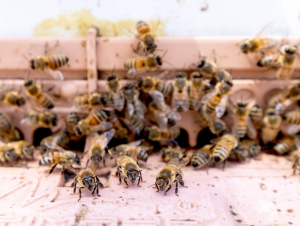
In response to changing climates, many plants and animals are moving to higher elevations, seeking cooler temperatures. But a new study from Georgia Tech and the University of Colorado Denver finds that flying insects like bees and moths may struggle with insurmountable issues to this escape route.

As part of an $11.6 million research initiative, Biological Sciences postdoctoral fellow Sarah Orr will leverage a new USDA Fellowship to study the impact of synthetic pesticides on bumblebees — a key pollinator for U.S. agricultural production.

Scientists at the Georgia Institute of Technology and Max Planck Institute for Intelligent Systems in Stuttgart have published a perspectives piece on the different tools used throughout the world aiding in the conservation of wildlife and biodiversity.
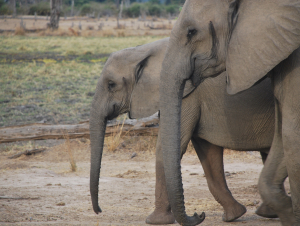
The new research explores the historical shifts in mammal traits and biodiversity loss in eastern Africa, revealing how environmental changes have disrupted mammal communities and highlighting the urgent need for targeted conservation efforts to protect vulnerable species.
Experts In The News
A special issue of Pure and Applied Functional Analysis honors mathematician School of Mathematics Regents' Professor Leonid Bunimovich on his 75th birthday.
Bunimovich's pioneering contributions have shaped modern dynamical systems. He is best known for discovering a fundamental mechanism of chaos in dynamical systems, including systems of chaotic billiards such as the Bunimovich stadium, Bunimovich flowers, and elliptic flowers. Learn about his research in this 2023 news story: Bringing Understanding to Chaotic Dynamics with Billiards, Flowers, and ... Mushrooms?
Georgia Tech School of Mathematics March 16, 2026If you’ve walked the aisles of a grocery store, scrolled through social media, watched television, or set foot in a fast-casual restaurant chain in recent months, you know that protein is having its moment.
So, why are brands pushing protein? An International Food Information Council study found that 70% of adults are looking to increase their protein intake. But as it makes its way into more products than ever before, is it too much of a good thing?
Lesley Baradel is a registered dietitian, nutritionist, and lecturer in the College of Sciences at Georgia Tech. In this episode of "Generating Buzz", she digs into the protein-packed trend, with implications ranging from health and wellness to marketing and how the rise of GLP-1s factors into the increased focus on the macronutrient.
Futurity March 5, 2026