College of Sciences

Latest News

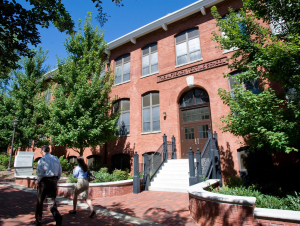
French Building.jpg

Ascend, a new career development program for mid-career faculty, launched its cohort for Spring 2024. Supported by the Office of Faculty Professional Development, Ascend cohort members include academic professionals and lecturers from across campus.
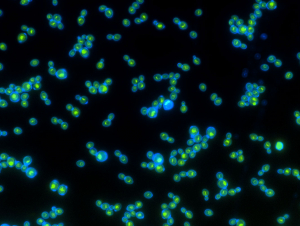
Green rhodopsin proteins inside the blue cell walls help these yeast grow faster when exposed to light. Photo: Anthony Burnetti, Georgia Institute of Technology.

Researchers in Georgia Tech’s School of Biological Sciences have engineered one of the world's first yeast cells able to turn light into usable metabolic energy, giving a glimpse into how this trait may have been passed between organisms across evolution — and how it could be synthesized to advance our understanding of biofuel production and cellular aging.
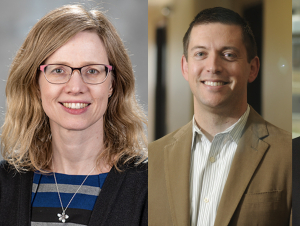
David-Martha-Aaron-Han.jpeg

Four faculty members have been selected for the second cohort of the Faculty Executive Leadership Academy (FELA) program, which is designed to identify and develop senior faculty members for leadership.
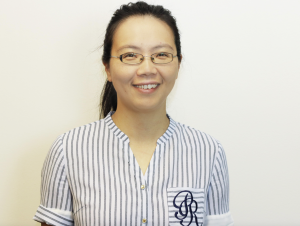
Wenjing Liao pic

Liao, associate professor in the School of Mathematics, will lecture on machine learning and deep learning at the American Mathematical Society (AMS) Southeastern Sectional Meeting on March 23-24, 2024, at Florida State University in Tallahassee. 



Artificial Intelligence

An interdisciplinary team of investigators at Georgia Tech, Emory University, and Penn State aim to develop an interactive AI system that can provide key insights and feedback to help these professionals improve and provide higher quality care, while satisfying the increasing demand for highly trained, effective mental health professionals.

Wildfires

Wildfires in Africa are fueled by a feedback loop as aerosols, induced by the fire, interact with the climate. It plays a critical role in the regulation of African ecosystems, reinforcing wildfires while also paving the way for elevated fire seasons in subsequent years.
Experts In The News

In December, The Conversation hosted a webinar on AI’s revolutionary role in drug discovery and development. Science and technology editor Eric Smalley interviewed Jeffrey Skolnick, Regents' Professor and eminent scholar in computational systems biology at Georgia Institute of Technology, and Benjamin P. Brown, assistant professor of pharmacology at Vanderbilt University. Skolnick has developed AI-based approaches to predict protein structure and function that may help with drug discovery and finding off-label uses of existing drugs. Brown’s lab works on creating new computer models that make drug discovery faster and more reliable.

The Conversation April 7, 2026

While it often gets written off as being distracted or not paying attention, daydreaming is actually a sign of an active and imaginative mind. In fact, a 2017 study found that daydreamers are generally smarter than their focused peers. “People with efficient brains may have too much brain capacity to stop their minds from wandering,” said Eric Schumacher, the Georgia Tech psychology professor who co-authored the study.

People who daydream frequently have things running through their heads, whether they are thinking through ideas or picturing possible outcomes. Letting the mind wander allows unexpected connections to form. To an outside observer, they may seem checked out of reality. However, other highly intellectual people know that they're truly deeply engaged, just not with what's going on right in front of them.

Your Tango April 4, 2026

Upcoming Events

Apr
28
2026
College of Sciences students, faculty, and staff are invited to our end-of-school year town hall.
May
01
2026
EAS 1600 students maintain the Library, and it's open to everyone on Fridays from 3:30 - 4:30 pm when classes are in session. Come learn about houseplants and bring your own plant home!

Spark: College of Sciences at Georgia Tech

Welcome — we're so glad you're here. Learn more about us in this video, narrated by Susan Lozier, College of Sciences Dean and Betsy Middleton and John Clark Sutherland Chair.