College of Sciences

Latest News

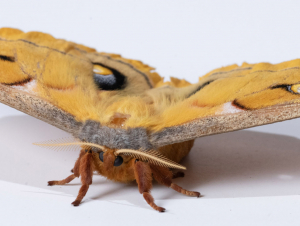
Hawkmoth flight muscles exhibit delayed stretch activation, a hallmark of asynchronous flight.

Many insects fly synchronously, matching the nervous system pulses to wing movement. But smaller insects don’t have the mechanics for this and must flap their wings harder, which works only up to a certain point. That’s where asynchronous flight comes in.

Wenjing Liao

Liao's research will dig into how deep learning might be leveraging to make mathematical advances in achieving more efficient modeling techniques. “This project has the potential to drive significant advances in scientific machine learning,” Liao says in her abstract. “The proposed model-reduction methods can be used to analyze large datasets and simulate complex phenomena in physics, biology, and engineering.”
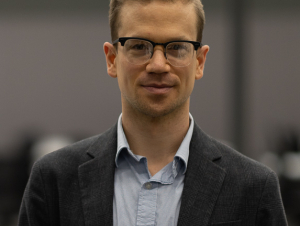
Stephen (Nick) Housley.jpg

Stephen (Nick) Housley wins the inaugural Jack and Dana McCallum Early Career Fellowship for his work at the intersection of neuroscience and cancer treatment.
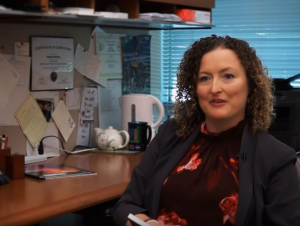
 Amanda Stockton

With a new Scialog grant, Amanda Stockton is studying what roles sea spray aerosols might play, digging into how they may have impacted the evolution of life on Earth, and how they may help us search for life beyond Earth.

Mary Holder.png

Holder hopes to boost outreach to K-12 schools in her new role while continuing to serve as associate director of the College of Science’s rapidly growing undergraduate neuroscience program.
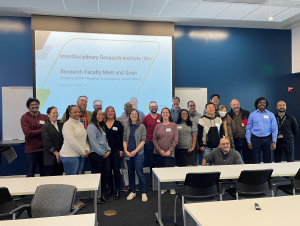


Photo - RFAC Meet and Greet Jan 2023.jpg

Research faculty at the Georgia Institute of Technology now have their own advocacy group. Since 2022, the Research Faculty Advisory Council (RFAC) has increased research faculty engagement and addressed concerns from researchers in the Interdisciplinary Research Institutes (IRIs), joining similar organizations that address such needs in other colleges.
Experts In The News

In December, The Conversation hosted a webinar on AI’s revolutionary role in drug discovery and development. Science and technology editor Eric Smalley interviewed Jeffrey Skolnick, Regents' Professor and eminent scholar in computational systems biology at Georgia Institute of Technology, and Benjamin P. Brown, assistant professor of pharmacology at Vanderbilt University. Skolnick has developed AI-based approaches to predict protein structure and function that may help with drug discovery and finding off-label uses of existing drugs. Brown’s lab works on creating new computer models that make drug discovery faster and more reliable.

The Conversation April 7, 2026

While it often gets written off as being distracted or not paying attention, daydreaming is actually a sign of an active and imaginative mind. In fact, a 2017 study found that daydreamers are generally smarter than their focused peers. “People with efficient brains may have too much brain capacity to stop their minds from wandering,” said Eric Schumacher, the Georgia Tech psychology professor who co-authored the study.

People who daydream frequently have things running through their heads, whether they are thinking through ideas or picturing possible outcomes. Letting the mind wander allows unexpected connections to form. To an outside observer, they may seem checked out of reality. However, other highly intellectual people know that they're truly deeply engaged, just not with what's going on right in front of them.

Your Tango April 4, 2026

Upcoming Events

Apr
28
2026
College of Sciences students, faculty, and staff are invited to our end-of-school year town hall.
May
01
2026
EAS 1600 students maintain the Library, and it's open to everyone on Fridays from 3:30 - 4:30 pm when classes are in session. Come learn about houseplants and bring your own plant home!

Spark: College of Sciences at Georgia Tech

Welcome — we're so glad you're here. Learn more about us in this video, narrated by Susan Lozier, College of Sciences Dean and Betsy Middleton and John Clark Sutherland Chair.