College of Sciences

Latest News

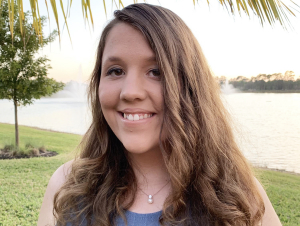
Breanna Shi

Shi provides her techniques for cultivating a positive and productive mentor-mentee connection. 

March 2, 2015: Image taken by the Operational Land Imager onboard Landsat 8. (NASA Earth Observatory)

Alex Robel and Shi Joyce Sim have a new model for how water moves under glaciers. Their theory shows that up to twice the amount of subglacial water that was originally predicted might be draining into the ocean – potentially increasing glacial melt, sea level rise, and biological disturbances.
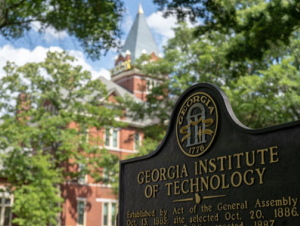
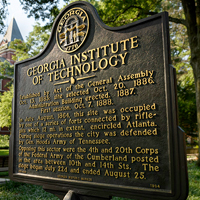
CampusSign-Outside.jpeg

USG Regents' distinctions are given to those who make outstanding contributions to their respective institutions and may be granted for a period of three years to faculty members from Georgia Tech, Augusta University, Georgia State University, the University of Georgia, and, in special circumstances, other USG institutions.
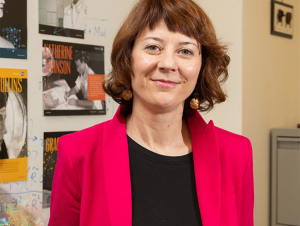
Tamara Bogdanovic

Research Corporation for Science Advancement has chosen four researchers for its Cottrell Plus SEED (Singular Exceptional Endeavors of Discovery) Awards for 2023, including Tamara Bogdanović for her research, "Risk and Rewards: Pushing Boundaries with RMHD Simulations of Multimessenger Massive Black Hole Binaries".
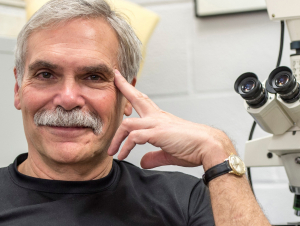
FrankRosenzweig

NASA awarded $6 million to a research team led by Georgia Tech’s Frank Rosenzweig to study how compartmentalization drives evolution. This five-year project, part of NASA’s Interdisciplinary Consortia for Astrobiology Research (ICAR) program, aims to explore how the organization of molecules within cells fosters evolutionary efficiency and novelty.
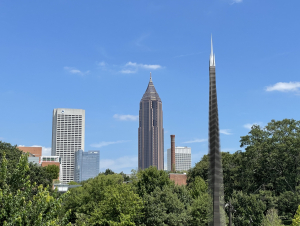
The Kessler Campanile at Georgia Tech

Georgia Tech’s economic impact surged to $4.5 billion in fiscal year 2022, leading the way among University System of Georgia member institutions.
Experts In The News

In December, The Conversation hosted a webinar on AI’s revolutionary role in drug discovery and development. Science and technology editor Eric Smalley interviewed Jeffrey Skolnick, Regents' Professor and eminent scholar in computational systems biology at Georgia Institute of Technology, and Benjamin P. Brown, assistant professor of pharmacology at Vanderbilt University. Skolnick has developed AI-based approaches to predict protein structure and function that may help with drug discovery and finding off-label uses of existing drugs. Brown’s lab works on creating new computer models that make drug discovery faster and more reliable.

The Conversation April 7, 2026

While it often gets written off as being distracted or not paying attention, daydreaming is actually a sign of an active and imaginative mind. In fact, a 2017 study found that daydreamers are generally smarter than their focused peers. “People with efficient brains may have too much brain capacity to stop their minds from wandering,” said Eric Schumacher, the Georgia Tech psychology professor who co-authored the study.

People who daydream frequently have things running through their heads, whether they are thinking through ideas or picturing possible outcomes. Letting the mind wander allows unexpected connections to form. To an outside observer, they may seem checked out of reality. However, other highly intellectual people know that they're truly deeply engaged, just not with what's going on right in front of them.

Your Tango April 4, 2026

Upcoming Events

May
01
2026
EAS 1600 students maintain the Library, and it's open to everyone on Fridays from 3:30 - 4:30 pm when classes are in session. Come learn about houseplants and bring your own plant home!

Spark: College of Sciences at Georgia Tech

Welcome — we're so glad you're here. Learn more about us in this video, narrated by Susan Lozier, College of Sciences Dean and Betsy Middleton and John Clark Sutherland Chair.