College of Sciences

Latest News

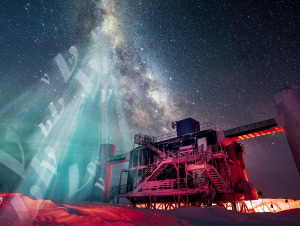
An artist's impression of neutrino emission from the Galactic plane, and IceCube Lab at the South Pole. (IceCube/NSF. Original photo by Martin Wolf)

High-energy neutrinos — with energies millions to billions of times higher than those produced by the fusion reactions that power stars — have been detected by the IceCube Neutrino Observatory, a gigaton detector operating at the Amundsen-Scott South Pole Station. It was built and is operated with National Science Foundation (NSF) funding and additional support from the fourteen countries that host institutional members of the IceCube Collaboration.
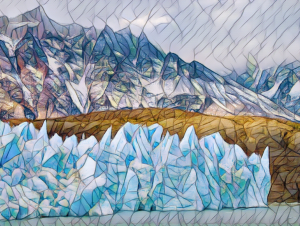
Robel's open-access software package will pair state-of-the-art tools with ice sheet models that anyone can use

Alex Robel, assistant professor in the School of Earth and Atmospheric Sciences, has been awarded a $780,000 NSF CAREER grant to improve how computer models of melting ice sheets incorporate data from field expeditions and satellites. Robel will create a new open-access software package — complete with state-of-the-art tools and paired with ice sheet models that anyone can use, even on a laptop or home computer.

Money Best Colleges 2023

The 5-star rating is a continuation of the Institute’s reputation for being a good return on investment.

Nadia Qutob, Physics major

Nadia Qutob is among five Georgia Tech undergraduates awarded the prestigious Goldwater Scholarship for 2023. By providing scholarships to students who intend to pursue research careers in the natural sciences, mathematics and engineering across the U.S. the Goldwater Foundation helps develop highly-qualified professionals in these critical fields.
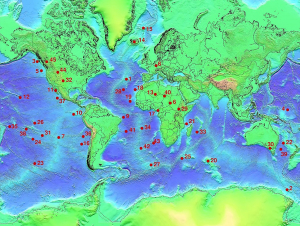
Mantle plumes, shown in red, have been identified around the world. (Ingo Wölbern, via Wikimedia Commons)

A team of scientists led by Georgia Tech have observed past episodic intraplate magmatism and corroborated the existence of a partial melt channel at the base of the Cocos Plate. Situated 60 kilometers beneath the Pacific Ocean floor, the magma channel covers more than 100,000 square kilometers, and originated from the Galápagos Plume more than 20 million years ago, supplying melt for multiple magmatic events — and persisting today.

Jean Lynch-Stieglitz

Jean Lynch-Stieglitz has earned a new fellowship with the National Academies of Sciences, Engineering, and Medicine to build STEM expertise in the State Department and the U.S. Agency for International Development. Lynch-Stieglitz, a professor in the School of Earth and Atmospheric Sciences, is one of nine fellows selected this year, and will be joined by Olga Shemyakina, associate professor in the School of Economics at Georgia Tech. 


Experts In The News

In December, The Conversation hosted a webinar on AI’s revolutionary role in drug discovery and development. Science and technology editor Eric Smalley interviewed Jeffrey Skolnick, Regents' Professor and eminent scholar in computational systems biology at Georgia Institute of Technology, and Benjamin P. Brown, assistant professor of pharmacology at Vanderbilt University. Skolnick has developed AI-based approaches to predict protein structure and function that may help with drug discovery and finding off-label uses of existing drugs. Brown’s lab works on creating new computer models that make drug discovery faster and more reliable.

The Conversation April 7, 2026

While it often gets written off as being distracted or not paying attention, daydreaming is actually a sign of an active and imaginative mind. In fact, a 2017 study found that daydreamers are generally smarter than their focused peers. “People with efficient brains may have too much brain capacity to stop their minds from wandering,” said Eric Schumacher, the Georgia Tech psychology professor who co-authored the study.

People who daydream frequently have things running through their heads, whether they are thinking through ideas or picturing possible outcomes. Letting the mind wander allows unexpected connections to form. To an outside observer, they may seem checked out of reality. However, other highly intellectual people know that they're truly deeply engaged, just not with what's going on right in front of them.

Your Tango April 4, 2026

Upcoming Events

May
01
2026
EAS 1600 students maintain the Library, and it's open to everyone on Fridays from 3:30 - 4:30 pm when classes are in session. Come learn about houseplants and bring your own plant home!

Spark: College of Sciences at Georgia Tech

Welcome — we're so glad you're here. Learn more about us in this video, narrated by Susan Lozier, College of Sciences Dean and Betsy Middleton and John Clark Sutherland Chair.