Latest News
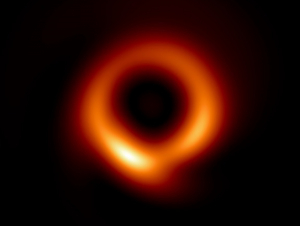
A team of researchers, including astrophysicists from Georgia Tech, the Institute for Advanced Study, and NSF’s NOIRLab, has developed a new machine-learning technique to enhance the fidelity and sharpness of radio interferometric images. To demonstrate the power of their new approach, which is called PRIMO, the team created a new, high-fidelity version of the iconic Event Horizon Telescope's image of the supermassive black hole at the center of Messier 87, a giant elliptical galaxy located 55 million light-years from Earth.
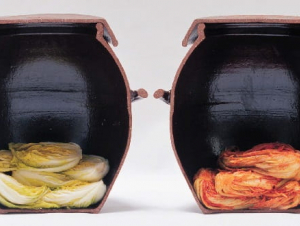
Today, most kimchi is made through mass fermentation in glass, steel, or plastic containers, but it has long been claimed that the highest quality kimchi is fermented in onggi. Kimchi purists now have scientific validation, thanks to recent research measuring carbon dioxide levels in onggi during kimchi fermentation, and developing a mathematical model to show how the gas was generated and moved through the onggi’s porous walls.
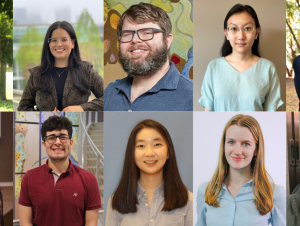
The Krish Roy - GRA Travel Award is a new travel award endowed by Professor Krishnendu Roy with funding provided by the Georgia Research Alliance (GRA). Roy is a Regents’ Professor and the Robert A. Milton Endowed Chair in Biomedical Engineering. He also serves as Director of the NSF Engineering Research Center (ERC) for Cell Manufacturing Technologies (CMaT), the Marcus Center for Cell Therapy Characterization and Manufacturing (MC3M), and the Center for ImmunoEngineering. The award was designed to support to IBB-affiliated undergraduate, graduate, and postdoctoral trainees conducting research in cell manufacturing, drug delivery, immunoengineering, and regenerative medicine.
Ten finalists (pictured left) were selected to receive a stipend to travel to a domestic or international conference or workshop to present their research work.

Two teams from Georgia Tech have been awarded a combined $15 million from the U.S. Department of Defense (DoD) for basic research projects as part of the Multidisciplinary University Research Initiative (MURI) program. MURI seeks to fund research teams with creative and diverse solutions to complex problems and is a major part of the DoD’s research portfolio.
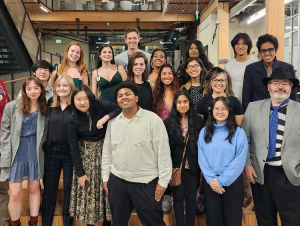
Over the 10-year history of the Atlanta Science Festival, the events planned by the faculty and students of STEMcomm have become a staple. We talked with the team to learn what STEMcomm is all about.

School of Physics Professor and Chair Feryal Özel and Professor Dimitrios Psaltis were founding members of the Event Horizon Telescope in 2000. Now, they’re working with an international slate of researchers to leverage machine learning for more accurate weather forecasts near EHT’s 11 radio telescopes around the world.