Latest News
![EVPR_Insitute_Research_Awards_V2[48].jpg](https://cos.gatech.edu/sites/default/files/styles/news_image/public/hg/evpr_insitute_research_awards_v248_0.jpg?itok=h2zo5ImZ "EVPR_Insitute_Research_Awards_V2[48].jpg")
Georgia Tech Announces 2023 EVPR Institute Research Award Winners
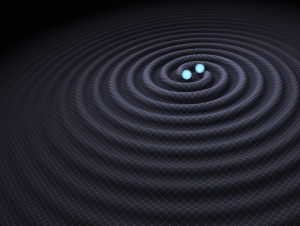
In collaboration with the Laser Interferometer Gravitational-Wave Observatory (LIGO), Surabhi Sachdev is co-leading the development of early-warning software to nab neutron-star mergers faster. "In the next run, we might be able to catch one of the neutron star mergers 10 seconds ahead of time," says Sachdev, an assistant professor in the School of Physics. "By the fifth run, we believe we can catch one with a full minute of warning."
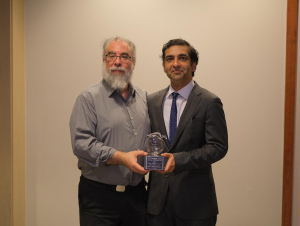
Electrical signals make the heart contract, but when those normal signals are disturbed, they can develop spiral waves that can lead to dangerous cardiac arrhythmias. Georgia Institute of Technology and Emory University researchers have received a 2023 Georgia Clinical & Translational Science Alliance (CTSA) award. The collaborators received the Team Science Award of Distinction for Early Stage Research for their recent work using live explanted human hearts to better understand arrhythmias.
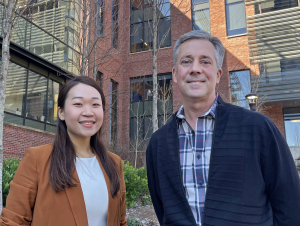
A new study by Georgia Tech researchers in the open-access journal PLOS Global Health probes ethnic health disparities and mortality risk factors in the United Kingdom. Their work points to mortality risk factors that are group-specific, but modifiable, supporting the notion of targeted interventions that could lead to greater health equity.

A spring memorial is planned for Howard M. Weiss, emeritus professor and a former school chair at Georgia Tech and Purdue, who died in February. The event will include the announcement of a new student award in Weiss’ name.
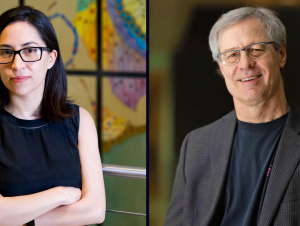
Georgia Tech researchers apply an economics theory to study the building blocks of biological evolution