College of Sciences

Latest News

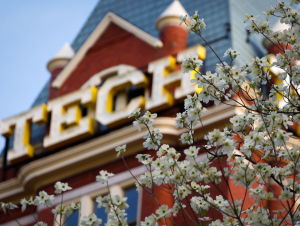
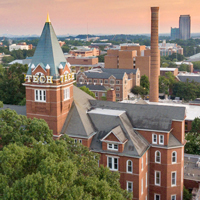
Tech Tower

Growing the careers of research faculty at Georgia Tech is an integral part of Research Next, the strategic plan for the Institute’s research enterprise.
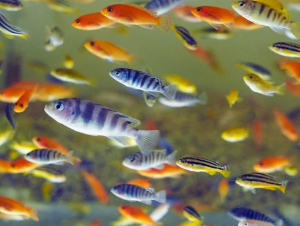
Researchers are studying Lake Malawi cichlids to explore connections between observed behavior and brain function.

From her home more than 800 miles away, Georgia Tech online master's student Jasmine Tata is monitoring fish in aquariums at Georgia Tech. The student-led research program is part of the School of Biological Sciences' McGrath Lab. Its researchers use machine learning, computer vision, and other technologies to better understand the evolution of animal behaviors.
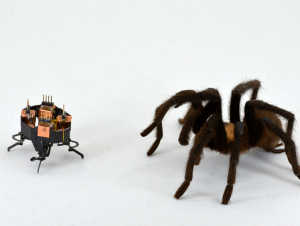
mCLARI_Spider.jpg

Georgia Tech Researcher Simon Sponberg collaborates to ask why robotic advancements have yet to outpace animals — and look at what we can learn from biology to engineer new robotic designs.

Credit: Unsplash

Georgia Tech physicists are investigating quantum sensing and leveraging cutting-edge techniques — embedding color centers in a 2D layered material called hexagonal boron nitride (hBN). The researchers’ results have created a new resource for developing next-generation, ultra-sensitive quantum electronic devices.
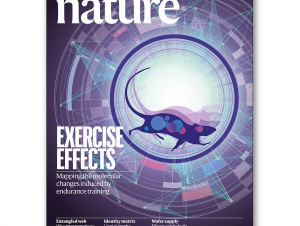
The May 2024 cover of the journal Nature, featuring MoTrPAC findings.

Exercise is good for you. To understand why, MoTrPAC scientists are creating a whole-body map of molecular responses to endurance training — finding striking “all tissue effects” in a new set of studies, featured on this month’s cover of the journal Nature.
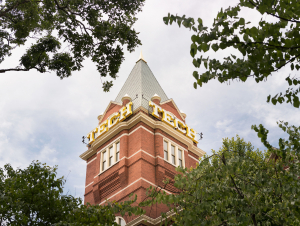
Georgia Tech (Allison Carter)

The new Ph.D. in Neuroscience and Neurotechnology is expected to enroll its first graduate students in Fall 2025. The interdisciplinary degree is a joint effort with the Colleges of Sciences, Computing, and Engineering. Sciences will also offer a new Minor in Neuroscience, beginning Fall 2024.
Experts In The News

Alex Robel, an associate professor in the School of Earth and Atmospheric Sciences at Georgia Tech, said pumping sand onshore is far from a perfect solution to stabilize a beach, but it’s “one of the best tools we have in our arsenal.”

“It’s been done in the United States for almost a century in different places and we know how to do it,” Robel said. “We’re good at it.”

But nourishment is only a Band-Aid for erosion. Once cities start replenishing sand, Robel said they have to keep doing it regularly. 

Atlanta Journal Constitution March 24, 2026

A team of researchers including David Hu, a professor in Georgia Tech’s School of Biological Sciences and George W. Woodruff School of Mechanical Engineering, have visualized mosquito flight behavior for the first time.

Based on their data, the researchers said they don’t think mosquitoes swarm because they’re following the pack. Each appeared to pick up on the cues independently, then found themselves at the same place at the same time.

“It’s like a crowded bar,” said Hu. “Customers aren’t there because they followed each other into the bar. They’re attracted by the same cues: drinks, music, and the atmosphere. The same is true of mosquitoes. Rather than following the leader, the insect follows the signals and happens to arrive at the same spot as the others. They’re good copies of each other.”

A similar story was published by The Economic Times.

ScienceDaily March 22, 2026

Upcoming Events

Apr
10
2026
Join the Spatial Ecology and Paleontology Lab for Fossil Fridays! Become a fossil hunter and help discover how vertebrate communities have changed through time.
Apr
10
2026
EAS 1600 students maintain the Library, and it's open to everyone on Fridays from 3:30 - 4:30 pm when classes are in session. Come learn about houseplants and bring your own plant home!
Apr
15
2026
Apr
16
2026
Join us for an afternoon of demonstrations on how AI can be used in research.
Apr
17
2026
This comprehensive hands-on workshop will guide participants through building a Mortgage Assistant Agent.

Spark: College of Sciences at Georgia Tech

Welcome — we're so glad you're here. Learn more about us in this video, narrated by Susan Lozier, College of Sciences Dean and Betsy Middleton and John Clark Sutherland Chair.