College of Sciences

Latest News

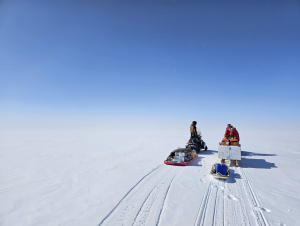
The team snowmobiling to a remote field site.

Rachel Moore is an expert at collecting data in difficult research environments, traveling to some of the most extreme places on Earth to research microbes and better understand astrobiology. This summer, she traveled to Greenland to collect ice cores, spending nearly 50 days on top of the Greenland Ice Sheet. The research could improve climate change predictions, while also helping astrobiologists better search for signs of life on icy worlds.
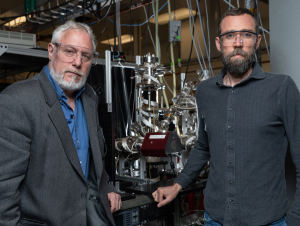
Thom Orlando (left) and Brant Jones

New Nature Astronomy research by Thom Orlando and Brant Jones shows electrons from Earth may contribute to the formation of water on the Moon’s surface. The work may impact our understanding of how water — a critical resource for life and sustained future human missions to the Moon — formed and continues to evolve on the lunar surface.
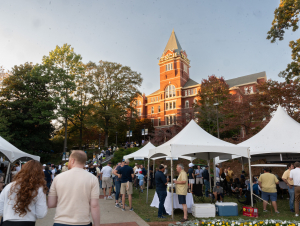
Tailgating on Tech Lawn

The senior director of the Georgia Tech Center for Mental Health Care and Resources gives tips for managing end-of-year stress.
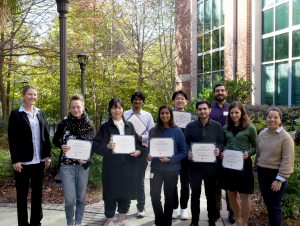
postdoc-research-symposium2.jpg

On Friday, Nov. 3, postdoctoral fellows participated in the Fall 2023 Georgia Tech Postdoctoral Research Symposium, hosted by the Office of Postdoctoral Services.
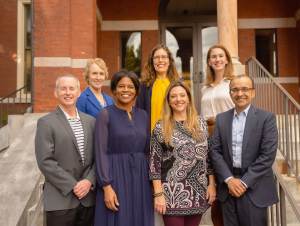
College of Sciences Dean Susan Lozier (top left) with 2023's new CoS Advisory Board members and board leadership. (Photo: Benjamin Zhao)

Alumni will lend their expertise to Dean Susan Lozier and College administrators regarding priorities and direction for sciences education and research.
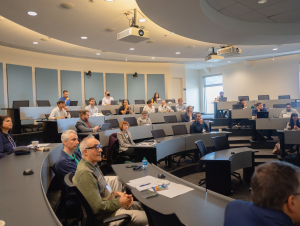
Physicists from around the country come to Georgia Tech for a recent machine learning conference. (Photo Benjamin Zhao)

Physicists from Georgia Tech and around the country shared their AI and ML research successes, and heard presentations from NSF and NASA officials on the funding landscape for proposals that include the technologies.
 

Experts In The News

Alex Robel, an associate professor in the School of Earth and Atmospheric Sciences at Georgia Tech, said pumping sand onshore is far from a perfect solution to stabilize a beach, but it’s “one of the best tools we have in our arsenal.”

“It’s been done in the United States for almost a century in different places and we know how to do it,” Robel said. “We’re good at it.”

But nourishment is only a Band-Aid for erosion. Once cities start replenishing sand, Robel said they have to keep doing it regularly. 

Atlanta Journal Constitution March 24, 2026

A team of researchers including David Hu, a professor in Georgia Tech’s School of Biological Sciences and George W. Woodruff School of Mechanical Engineering, have visualized mosquito flight behavior for the first time.

Based on their data, the researchers said they don’t think mosquitoes swarm because they’re following the pack. Each appeared to pick up on the cues independently, then found themselves at the same place at the same time.

“It’s like a crowded bar,” said Hu. “Customers aren’t there because they followed each other into the bar. They’re attracted by the same cues: drinks, music, and the atmosphere. The same is true of mosquitoes. Rather than following the leader, the insect follows the signals and happens to arrive at the same spot as the others. They’re good copies of each other.”

A similar story was published by The Economic Times.

ScienceDaily March 22, 2026

Upcoming Events

Apr
10
2026
Join the Spatial Ecology and Paleontology Lab for Fossil Fridays! Become a fossil hunter and help discover how vertebrate communities have changed through time.
Apr
10
2026
EAS 1600 students maintain the Library, and it's open to everyone on Fridays from 3:30 - 4:30 pm when classes are in session. Come learn about houseplants and bring your own plant home!
Apr
15
2026
Apr
16
2026
Join us for an afternoon of demonstrations on how AI can be used in research.
Apr
17
2026
This comprehensive hands-on workshop will guide participants through building a Mortgage Assistant Agent.

Spark: College of Sciences at Georgia Tech

Welcome — we're so glad you're here. Learn more about us in this video, narrated by Susan Lozier, College of Sciences Dean and Betsy Middleton and John Clark Sutherland Chair.