College of Sciences

Latest News

clathrate.jpg

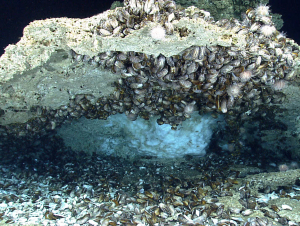
In a groundbreaking study, a team of Georgia Tech researchers has unveiled a remarkable discovery: the identification of novel bacterial proteins that play a vital role in the formation and stability of methane clathrates, which trap methane gas beneath the seafloor. These newfound proteins not only suppress methane clathrate growth as effectively as toxic chemicals used in drilling but also prove to be eco-friendly and scalable. This innovative breakthrough not only promises to enhance environmental safety in natural gas transportation but also sheds light on the potential for similar biomolecules to support life beyond Earth.
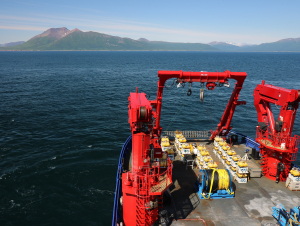
Scientists, including an EAS researcher, prepare to deploy magnetotelluric instruments near the Alaska Peninsula. (Photo Samer Naif).jpeg

Earth and Atmospheric Sciences Professor Samer Naif and Darcy Cordell, a former postdoctoral scholar, have uncovered new findings that could change how scientists view water’s role in preventing — or perhaps encouraging — earthquakes.
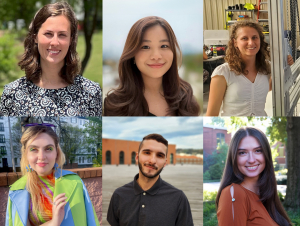


2023 Haley Fellows (clockwise from top left) Jessica Deutsch, Quynh Nguyen, Eliza Gazda, Sydney Popsuj, Jose Luis Ramirez-Colon, Sidney Scott-Sharoni.jpg

The College of Sciences graduate students were chosen as 2023-24 Herbert P. Haley Fellowships for their research and academic achievements.
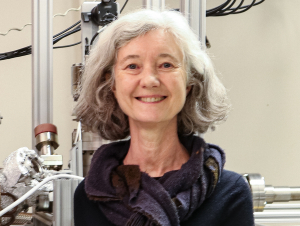
 

Claire Berger headshot.jpg

Physicist Claire Berger has been awarded the Chevalier dans L'ordre des Palmes Académiques for her groundbreaking graphene research — and her work on strengthening ties between U.S. and French scientists.

Neuro Launch News Image

Neurosciences research holds enormous potential for wide-ranging health and societal impact, and Georgia Tech’s culture of applied research and integrated interdisciplinary liberal arts scholarship is uniquely positioned to create the environment in which Neuro Next can become an international leader in the discovery, innovation, and translation in neuroscience and neurotechnology.
Search Network Site

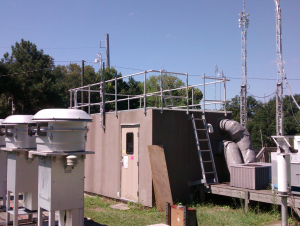
Each year, exposure to airborne particulate matter known as PM2.5 (particles with a diameter smaller than 2.5 micrometers) leads to millions of premature deaths worldwide. Organic aerosols are the dominant constituents of PM2.5 in many locations around the world. Historically, the chemical complexity of organic aerosols has made it difficult to gauge their toxicity level. But a study led by researchers at Georgia Institute of Technology has advanced understanding of both the chemical composition of PM2.5 and the reaction of alveolar cells of the lungs exposed to this pollution, highlighting the growing threat posed to human health.
Experts In The News

Alex Robel, an associate professor in the School of Earth and Atmospheric Sciences at Georgia Tech, said pumping sand onshore is far from a perfect solution to stabilize a beach, but it’s “one of the best tools we have in our arsenal.”

“It’s been done in the United States for almost a century in different places and we know how to do it,” Robel said. “We’re good at it.”

But nourishment is only a Band-Aid for erosion. Once cities start replenishing sand, Robel said they have to keep doing it regularly. 

Atlanta Journal Constitution March 24, 2026

A team of researchers including David Hu, a professor in Georgia Tech’s School of Biological Sciences and George W. Woodruff School of Mechanical Engineering, have visualized mosquito flight behavior for the first time.

Based on their data, the researchers said they don’t think mosquitoes swarm because they’re following the pack. Each appeared to pick up on the cues independently, then found themselves at the same place at the same time.

“It’s like a crowded bar,” said Hu. “Customers aren’t there because they followed each other into the bar. They’re attracted by the same cues: drinks, music, and the atmosphere. The same is true of mosquitoes. Rather than following the leader, the insect follows the signals and happens to arrive at the same spot as the others. They’re good copies of each other.”

A similar story was published by The Economic Times.

ScienceDaily March 22, 2026

Upcoming Events

Apr
10
2026
Join the Spatial Ecology and Paleontology Lab for Fossil Fridays! Become a fossil hunter and help discover how vertebrate communities have changed through time.
Apr
10
2026
EAS 1600 students maintain the Library, and it's open to everyone on Fridays from 3:30 - 4:30 pm when classes are in session. Come learn about houseplants and bring your own plant home!
Apr
15
2026
Apr
16
2026
Join us for an afternoon of demonstrations on how AI can be used in research.
Apr
17
2026
This comprehensive hands-on workshop will guide participants through building a Mortgage Assistant Agent.

Spark: College of Sciences at Georgia Tech

Welcome — we're so glad you're here. Learn more about us in this video, narrated by Susan Lozier, College of Sciences Dean and Betsy Middleton and John Clark Sutherland Chair.