College of Sciences

Latest News

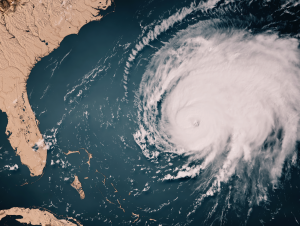
3D Render of Category 4 Major Hurricane Fiona east of Florida. Getty Images.

Forecasts call for a near-normal hurricane season, but climate change could make future seasons more unpredictable than ever before.
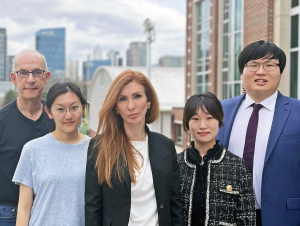
OzLink Team

Early stage company from M.G. Finn lab developing drug delivery system for sustained, extended release that can vary from days to weeks.
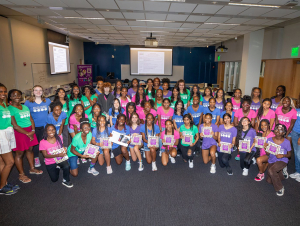
STEM Gems at Georgia Tech

The last week of June, fifty teenage girls from around the Atlanta metro area convened daily at Georgia Tech's Marcus Center for the first in-person STEM Gems summer camp.
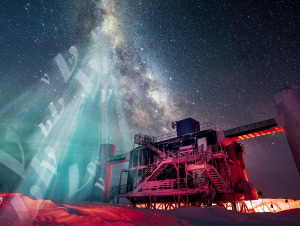
An artist's impression of neutrino emission from the Galactic plane, and IceCube Lab at the South Pole. (IceCube/NSF. Original photo by Martin Wolf)

High-energy neutrinos — with energies millions to billions of times higher than those produced by the fusion reactions that power stars — have been detected by the IceCube Neutrino Observatory, a gigaton detector operating at the Amundsen-Scott South Pole Station. It was built and is operated with National Science Foundation (NSF) funding and additional support from the fourteen countries that host institutional members of the IceCube Collaboration.
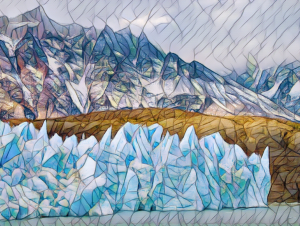
Robel's open-access software package will pair state-of-the-art tools with ice sheet models that anyone can use

Alex Robel, assistant professor in the School of Earth and Atmospheric Sciences, has been awarded a $780,000 NSF CAREER grant to improve how computer models of melting ice sheets incorporate data from field expeditions and satellites. Robel will create a new open-access software package — complete with state-of-the-art tools and paired with ice sheet models that anyone can use, even on a laptop or home computer.

Money Best Colleges 2023

The 5-star rating is a continuation of the Institute’s reputation for being a good return on investment.
Experts In The News

Alex Robel, an associate professor in the School of Earth and Atmospheric Sciences at Georgia Tech, said pumping sand onshore is far from a perfect solution to stabilize a beach, but it’s “one of the best tools we have in our arsenal.”

“It’s been done in the United States for almost a century in different places and we know how to do it,” Robel said. “We’re good at it.”

But nourishment is only a Band-Aid for erosion. Once cities start replenishing sand, Robel said they have to keep doing it regularly. 

Atlanta Journal Constitution March 24, 2026

A team of researchers including David Hu, a professor in Georgia Tech’s School of Biological Sciences and George W. Woodruff School of Mechanical Engineering, have visualized mosquito flight behavior for the first time.

Based on their data, the researchers said they don’t think mosquitoes swarm because they’re following the pack. Each appeared to pick up on the cues independently, then found themselves at the same place at the same time.

“It’s like a crowded bar,” said Hu. “Customers aren’t there because they followed each other into the bar. They’re attracted by the same cues: drinks, music, and the atmosphere. The same is true of mosquitoes. Rather than following the leader, the insect follows the signals and happens to arrive at the same spot as the others. They’re good copies of each other.”

A similar story was published by The Economic Times.

ScienceDaily March 22, 2026

Upcoming Events

Apr
15
2026
Apr
16
2026
Join us for an afternoon of demonstrations on how AI can be used in research.
Apr
17
2026
This comprehensive hands-on workshop will guide participants through building a Mortgage Assistant Agent.
Apr
17
2026
Join the Spatial Ecology and Paleontology Lab for Fossil Fridays! Become a fossil hunter and help discover how vertebrate communities have changed through time.
Apr
17
2026
EAS 1600 students maintain the Library, and it's open to everyone on Fridays from 3:30 - 4:30 pm when classes are in session. Come learn about houseplants and bring your own plant home!

Spark: College of Sciences at Georgia Tech

Welcome — we're so glad you're here. Learn more about us in this video, narrated by Susan Lozier, College of Sciences Dean and Betsy Middleton and John Clark Sutherland Chair.