College of Sciences

Latest News

sawicki_brownhat2_23web_0.jpg

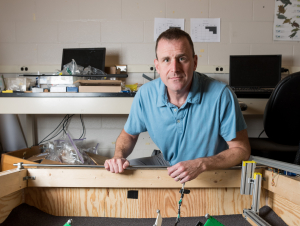
Effective January 1st, Gregory Sawicki will serve as interim executive director of the Georgia Tech Institute for Robotics and Intelligent Machines (IRIM). Sawicki is a professor and the Joseph Anderer Faculty Fellow in the George W. Woodruff School of Mechanical Engineering with a joint appointment in the School of Biological Sciences.

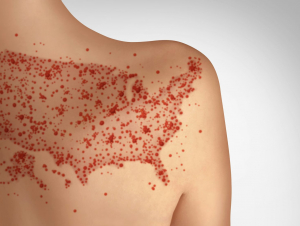
Northern Giant Murder Hornet

A Georgia Tech professor says eradicating the “murder hornet” will help the U.S. avoid a potential agricultural and commercial disaster.  

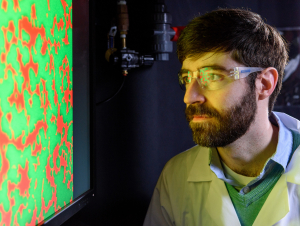
Lipids can be powerful tools to help deliver drugs and treatments through their interactions with proteins. (Adobe Stock)

From helping develop immunotherapies to teaching students, a new open-access database called BioDolphin is providing fresh insights on lipid-protein interactions — a critical component of biochemical research.

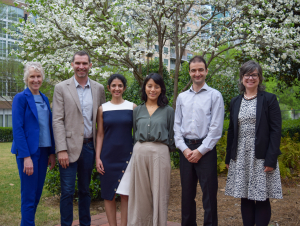
Members of the College of Sciences Young Alumni Board. (Sid Suratia)

The College of Sciences launched its Young Alumni Board, a volunteer-based leadership group that is tasked with deepening the relationship between recent Yellow Jacket graduates and the College. The inaugural Board consists of 13 members who obtained an undergraduate degree from the College within the last 20 years or a master’s or Ph.D. degree from the College within the last 10 years. 

Two Cuban brown anoles, Anolis sagrei (Credit: Day's Edge Productions)

The Georgia Tech-led study captures two lizard species adapting in response to competition. The study provides some of the clearest evidence to date of evolution in action.

Atlanta, GA

Led by School of Earth and Atmospheric Sciences Professor Greg Huey, the NSF RAPID grant is for analyzing air chemistry data collected during a three-week span when a chemical plume impacted the Atlanta area.

Experts In The News

Green iguanas (Iguana iguana) are not native to the U.S. but were brought to Florida in the 1960s, where they have, for the most part, flourished—except, that is, when temperatures have dropped below 50 degrees F (10 degrees C). 

These chilly conditions can cause a cold shock in the lizards. And because the iguanas tend to sleep in trees, getting cold shocked can sometimes cause the animals to fall from the skies in an infamous Florida phenomenon. 

“These tropical lizards were experiencing conditions that they’ve never experienced in their entire evolutionary history before, tens of millions of years,” says James Stroud, an evolutionary biologist at the Georgia Institute of Technology.

But in Florida, colder conditions occur every few years—albeit less often as temperatures rise because of climate change. The experience of the iguanas that have been forced to confront the cold in the state can teach scientists more about how animals respond to new climates more generally, Stroud says.

Scientific American January 16, 2026

Jennifer Glass, professor in the School of Earth and Atmospheric Sciences, was recently quoted in an article published in Scientific American that discusses the evolution of Wikipedia:

As Wikipedia’s use grew, some educators softened their stance, encouraging its use to find leads to sources that students could dig into directly. Others took a different approach, assigning students to edit Wikipedia entries—many through Wiki Education.

Jennifer Glass, a biogeochemist at Georgia Institute of Technology, is one of those professors; she has incorporated Wikipedia editing into her teaching since 2018. She wanted a student project that emphasized the concise and technical but understandable writing style that the site uses. And although she hadn’t done much editing for Wikipedia herself, she was impressed by the website’s breadth of content.

Each semester, her students write one article from scratch about a topic they research, from dolomitization to the tropopause. Glass says the project teaches them the value of institutional access to published literature and the skill of fact-checking their writing line by line.

Scientific American January 15, 2026

Upcoming Events

Feb
13 to 20
2026
Feb
16
2026
"Control of Cortical Wiring and Function by Gradients of Cell Identities"
Feb
18
2026
Featuring | Ganesh Sundaramoorthi - Senior Research Fellow/Director of Research at RTX Technology Research Center
Feb
19
2026
Leaders and trainees across academia, research, and clinical practice to share their experiences and offer guidance for undergraduate students exploring future careers.
Feb
20
2026
Join the Spatial Ecology and Paleontology Lab for Fossil Fridays! Become a fossil hunter and help discover how vertebrate communities have changed through time.

Spark: College of Sciences at Georgia Tech

Welcome — we're so glad you're here. Learn more about us in this video, narrated by Susan Lozier, College of Sciences Dean and Betsy Middleton and John Clark Sutherland Chair.