College of Sciences

Latest News

National labs

The dashboards highlight significant achievements in joint research, funding, and innovation, demonstrating each partnership’s commitment to addressing critical global challenges.
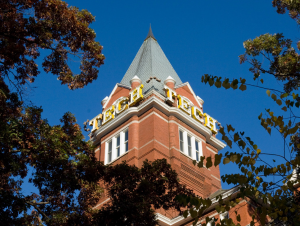
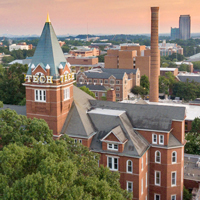
Tech Tower

By uniting experts across disciplines, Georgia Tech is positioning itself at the forefront of neuroscience and space research.
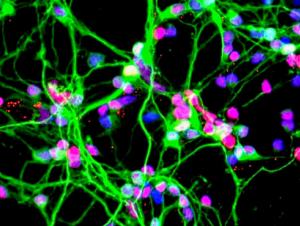
Neurons growing in a culture dish (NASA)

Researchers at Georgia Tech have developed an algorithm that helps AI models develop internal organization just like the human brain — boosting efficiency by 20 percent.
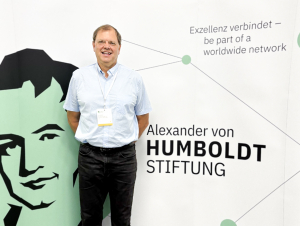
Professor Joel Kostka at the Al­ex­an­der von Hum­boldt Found­a­tion annual meeting and reception in Germany this week.

The award will support Kostka’s research on the role of marine plant microbiomes in coastal climate resilience in collaboration with Germany’s Max Planck Institute.
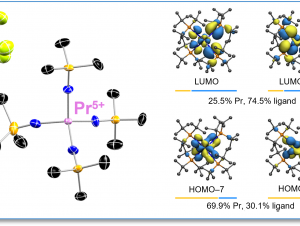
A diagram showing how the atoms are connected in the praseodymium compound (left); an image showing the most important electron interactions (right)

New Oxidation State for a Rare Earth Element Could Advance Quantum and Electronic Devices 
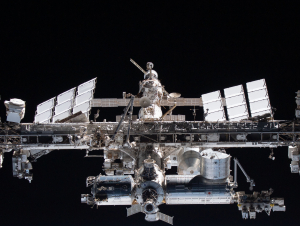
Solar cells account for approximately six percent of the electricity used on Earth; however, in space, they play a significantly larger role, with nearly all satellites relying on advanced solar cells for their power. That’s why Georgia Tech researchers will soon send 18 photovoltaic cells to the International Space Station for a study of how space conditions affect the devices’ operation over time.
Experts In The News

Alex Robel, an associate professor in the School of Earth and Atmospheric Sciences at Georgia Tech, said pumping sand onshore is far from a perfect solution to stabilize a beach, but it’s “one of the best tools we have in our arsenal.”

“It’s been done in the United States for almost a century in different places and we know how to do it,” Robel said. “We’re good at it.”

But nourishment is only a Band-Aid for erosion. Once cities start replenishing sand, Robel said they have to keep doing it regularly. 

Atlanta Journal Constitution March 24, 2026

A team of researchers including David Hu, a professor in Georgia Tech’s School of Biological Sciences and George W. Woodruff School of Mechanical Engineering, have visualized mosquito flight behavior for the first time.

Based on their data, the researchers said they don’t think mosquitoes swarm because they’re following the pack. Each appeared to pick up on the cues independently, then found themselves at the same place at the same time.

“It’s like a crowded bar,” said Hu. “Customers aren’t there because they followed each other into the bar. They’re attracted by the same cues: drinks, music, and the atmosphere. The same is true of mosquitoes. Rather than following the leader, the insect follows the signals and happens to arrive at the same spot as the others. They’re good copies of each other.”

A similar story was published by The Economic Times.

ScienceDaily March 22, 2026

Upcoming Events

Apr
08
2026
Featuring | Jessy Li - Associate Professor Department of Lingustics & Department of Computer Science, UT Austin
Apr
08
2026
Join attendees from universities around Atlanta for an evening of data-blitz talks, undergraduate poster presentations and catered networking with students and faculty from the Atlanta neuroscience community.
Apr
08
2026
This signature networking event brings together College of Sciences students and distinguished Georgia Tech alumni for an evening of relationship building and professional discovery.
Apr
10
2026
Join the Spatial Ecology and Paleontology Lab for Fossil Fridays! Become a fossil hunter and help discover how vertebrate communities have changed through time.
Apr
10
2026
EAS 1600 students maintain the Library, and it's open to everyone on Fridays from 3:30 - 4:30 pm when classes are in session. Come learn about houseplants and bring your own plant home!

Spark: College of Sciences at Georgia Tech

Welcome — we're so glad you're here. Learn more about us in this video, narrated by Susan Lozier, College of Sciences Dean and Betsy Middleton and John Clark Sutherland Chair.