
College of Sciences

Latest News

Thomas Kim, Maureen Metcalfe, and Christa Sobon explain how they leverage the scientific method to fuel career success.

From biotech startups to consulting and corporate leadership, three College of Sciences alumni share how applying the scientific method encourages career growth and business success.

Brain illustration (iStock)

A multidisciplinary team has discovered how lateral inhibition helps our brains process visual information, and it could expand our knowledge of sensory perception, leading to applications in neuro-medicine and artificial intelligence.

logo_scmb.png

The Final SCMB Symposium is being held on April 10th – 11th, 2025 on Georgia Tech campus.
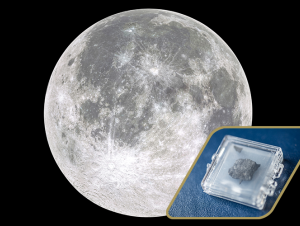
Lunar Samples

New NASA-funded research by Georgia Tech offers fresh insights into the phenomenon of space weathering.
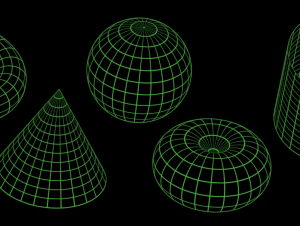
You can describe the shape you live on in multiple dimensions. vkulieva/iStock via Getty Images Plus

Whether trying to design secure sensor networks, mine data or use origami to deploy satellites, the underlying language and ideas are likely to be that of topology.
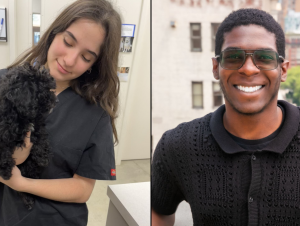
Tech Promise: Second-year biology majors Giuli Capparelli Sanabria and J’Avani Stinson

Second-year biology majors Giuli Capparelli Sanabria and J’Avani Stinson are pursuing Georgia Tech degrees with fewer financial worries, thanks to the G. Wayne Clough Tech Promise Scholarship. 
Experts In The News

Alex Robel, an associate professor in the School of Earth and Atmospheric Sciences at Georgia Tech, said pumping sand onshore is far from a perfect solution to stabilize a beach, but it’s “one of the best tools we have in our arsenal.”

“It’s been done in the United States for almost a century in different places and we know how to do it,” Robel said. “We’re good at it.”

But nourishment is only a Band-Aid for erosion. Once cities start replenishing sand, Robel said they have to keep doing it regularly. 

Atlanta Journal Constitution March 24, 2026

A team of researchers including David Hu, a professor in Georgia Tech’s School of Biological Sciences and George W. Woodruff School of Mechanical Engineering, have visualized mosquito flight behavior for the first time.

Based on their data, the researchers said they don’t think mosquitoes swarm because they’re following the pack. Each appeared to pick up on the cues independently, then found themselves at the same place at the same time.

“It’s like a crowded bar,” said Hu. “Customers aren’t there because they followed each other into the bar. They’re attracted by the same cues: drinks, music, and the atmosphere. The same is true of mosquitoes. Rather than following the leader, the insect follows the signals and happens to arrive at the same spot as the others. They’re good copies of each other.”

A similar story was published by The Economic Times.

ScienceDaily March 22, 2026

Upcoming Events

Apr
10
2026
Join the Spatial Ecology and Paleontology Lab for Fossil Fridays! Become a fossil hunter and help discover how vertebrate communities have changed through time.
Apr
10
2026
EAS 1600 students maintain the Library, and it's open to everyone on Fridays from 3:30 - 4:30 pm when classes are in session. Come learn about houseplants and bring your own plant home!
Apr
15
2026
Apr
16
2026
Join us for an afternoon of demonstrations on how AI can be used in research.
Apr
17
2026
This comprehensive hands-on workshop will guide participants through building a Mortgage Assistant Agent.

Spark: College of Sciences at Georgia Tech

Welcome — we're so glad you're here. Learn more about us in this video, narrated by Susan Lozier, College of Sciences Dean and Betsy Middleton and John Clark Sutherland Chair.