Latest News
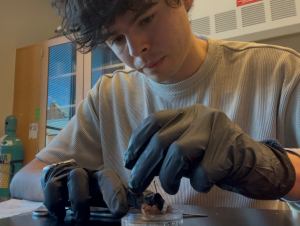
Because of Tech Promise, Luis Delgado and Nick Fabrizio were able to dream big and set their sights on Georgia Tech.

The researchers suggest that carbon removal can have clear benefits on the road to reducing greenhouse gas emissions, but it needs more oversight to be responsibly adopted at large scales.

Laura Cadonati, professor in the School of Physics and associate dean for Research in the College of Sciences, has been elected to the Board of Directors of the American Physical Society.

Georgia Tech is pleased to partner with the Georgia Forestry Commission on the approved $8.9 million Georgia Forestry Innovation Initiative included in Governor Brian Kemp’s amended FY 2026 budget. This effort aims to transform low-value wood and mill byproducts into high-value materials, strengthening Georgia’s forest-based economy and supporting new commercial opportunities across the state.

Georgia Tech Energy Day returns this year on March 19 with an expanded focus and a new collaborative momentum. Cohosted by the Georgia Tech Institute for Matter and Systems (IMS) and the Strategic Energy Institute, (SEI) with plenary session support from the Energy Policy and Innovation Center, Energy Day 2026 convenes leaders from academia, industry, government, and students to address the challenges associated with meeting the rapidly growing electricity demand driven by artificial intelligence (AI) and high-performance computing.
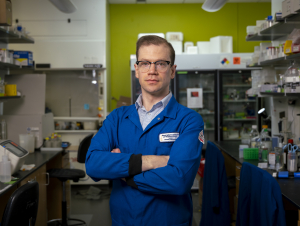
Georgia Tech researcher Nick Housley is developing a drug‑delivery system designed to send cancer treatments directly to tumors while minimizing damage to healthy tissue. Early preclinical results show that the nanohydrogels successfully concentrated drugs at tumor sites, and Housley’s team is now preparing for broader testing to move the technology toward clinical trials.