To request a media interview, please reach out to experts using the faculty directories for each of our six schools, or contact Jess Hunt-Ralston, College of Sciences communications director. A list of faculty experts is also available to journalists upon request.
Latest News
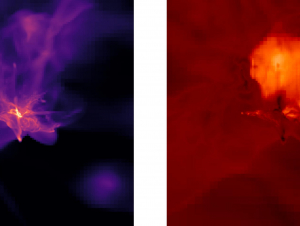
The first-of-its-kind simulation suggests that direct formation of these black holes would be accompanied by specific kinds of intense radiation, including X-rays and ultraviolet emission that would shift to infrared by the time they reach the telescope. The black holes would also likely spawn massive metal-free stars, a finding that was unexpected.
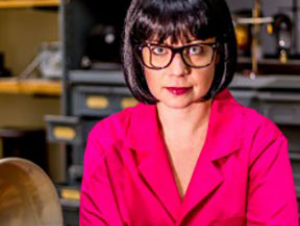
By day, she’s Jennifer Leavey, cademic professional in the School of Biological Sciences. When she straps on a guitar, Leavey becomes Leucine Zipper, leader of the rock band Zinc Fingers. For a change of pace, ScienceMatters samples the band’s science-inspired songs. Leavey shares how the band uses music and other media to teach science.
On WSB-TV2, Kim Cobb describes sea-level sensors deployed by Georgia Tech researchers in Savannah. First results in the aftermath of Hurricane Florence are just coming in.
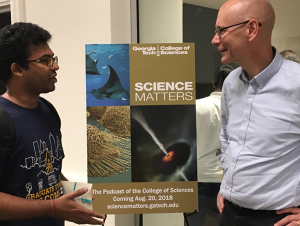
Sachin Sarath Yadav Kothandaraman, a graduate student in the Bioinformatics Graduate Program, won the ScienceMatters Episode 5 quiz. Kothandaraman is researching machine-learning tools to predict drug responses to cancers in Fredrik Vannberg's lab.

Simon Sponberg uses moths and cockroaches to study "the physics of living systems." With the help of virtual reality and video game principles, Sponberg's research into how animals move within their environments could lead to better robots, vehicles, and prosthetic devices.
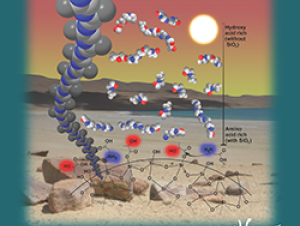
Work from the Center for Chemical Evolution suggests a mechanism by which organic compounds and silica, found in sand, could have produced long peptides in prebiotic Earth.