To request a media interview, please reach out to experts using the faculty directories for each of our six schools, or contact Jess Hunt-Ralston, College of Sciences communications director. A list of faculty experts is also available to journalists upon request.
Latest News
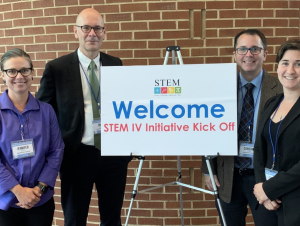
Georgia Tech is a new participant in the University System of Georgia (USG) STEM IV initiative, which was launched on October 29-30, in Athens, Georgia.
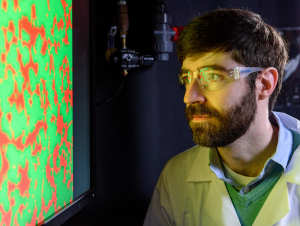
A team with promising technology to combat antibiotic resistance has received funding to accelerate commercialization. The team includes David Weiss, a clinical investigator and associate professor of infectious diseases at Emory University, and Peter Yunker, an assistant professor in the School of Physics and researcher in the Petit Institute for Bioengineering and Bioscience. A biophysicist, Yunker is the team’s technical investigator.

Chung Kim, an academic program coordinator in the College of Sciences, wins quiz 6 of ScienceMatters Season 3.

Six College of Sciences alumni share their memories of life at Georgia Tech, the lessons they learned that they applied in their careers, and what they would tell current students about how to make the most of their time in the College of Sciences.
Georgia Tech science powers the technology behind TV and smartphone screens, thanks to breakthroughs in physics, chemistry, and materials science. Carlos Silva, a professor in the School of Physics and School of Chemistry and Biochemistry, is adding to that legacy with his research into the next generation of semiconductors for electronic devices.
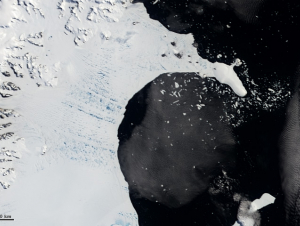
Meltwater ponds riddle a kilometer-thick, 10,000-year-old Antarctic ice shelf, which shatters just weeks later. The collapse shocks scientists and unleashes the glacier behind the ice shelf, driving up sea level. A new study puts damage by meltwater ponds to ice shelves and the ensuing threat to sea level into cool, mathematical perspective.