To request a media interview, please reach out to experts using the faculty directories for each of our six schools, or contact Jess Hunt-Ralston, College of Sciences communications director. A list of faculty experts is also available to journalists upon request.
Latest News
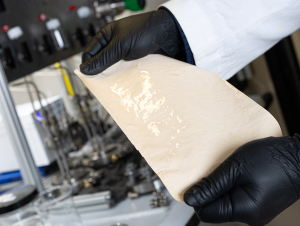
The membranes would improve distillation processes that account for 1% of the world’s energy use.
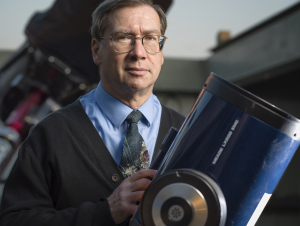
Jim Sowell talks about Georgia Tech's observatory, what can be learned from an eclipse, and why you should watch for it wherever you are.
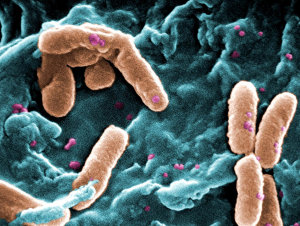
Georgia Tech’s Center for Microbial Dynamics and Infection receives nearly $1.5 million in grants to study bacterial defenses and communications — how they use them to join multicellular groups while protecting themselves from threats, and how they use ‘quorum sensing’ to take collective action.
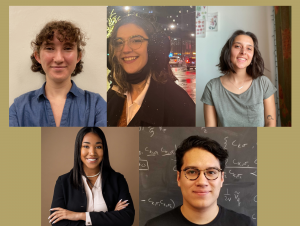
With goals to boost science, engineering, and computing Ph.D. researchers from underserved populations, UCEM grows in 2023 to include students from Schools of Biological Sciences, Earth and Atmospheric Sciences, Mathematics, and Physics.
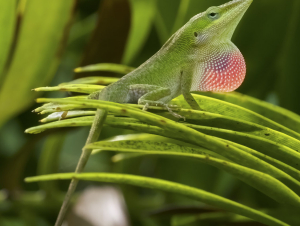
By lassoing lizards, putting tiny chips on their legs, and tracking them for three years, Georgia Tech’s James Stroud revealed why species often appear unchanged for millions of years despite Charles Darwin’s theory of constant evolution.
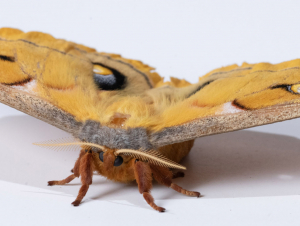
Many insects fly synchronously, matching the nervous system pulses to wing movement. But smaller insects don’t have the mechanics for this and must flap their wings harder, which works only up to a certain point. That’s where asynchronous flight comes in.