To request a media interview, please reach out to experts using the faculty directories for each of our six schools, or contact Jess Hunt-Ralston, College of Sciences communications director. A list of faculty experts is also available to journalists upon request.
News Center
Latest News
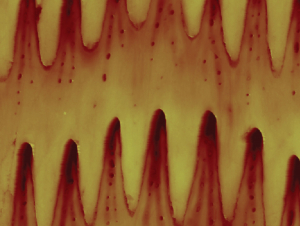
The mesmerizing flow of a sidewinder moving obliquely across desert sands has captivated biologists for centuries and has been variously studied over the years, but questions remained about how the snakes produce their unique motion. Sidewinders are pit vipers, specifically rattlesnakes, native to the deserts of the southwestern United States and adjacent Mexico.

Colleagues, students, alumni, and friends honor the remarkable life and work of Bridgette A. Barry, a renowned professor of biochemistry and biophysics in the School of Chemistry and Biochemistry, who also a longtime member of the Parker H. Petit Institute for Bioengineering and Bioscience.

An annual award from the Georgia Institute of Technology, the Ivan Allen Jr. prize honors individuals who have stood up for moral principles at the risk of their careers and livelihoods.

The rise of "deepfakes" — videos that are computer-enhanced to impersonate real people in a way that average people may not be able to determine they're fake — is getting the attention of a School of Psychology graduate student. Zachary Tidler is conducting research to better understand if certain individuals are fooled by this manipulated media more often than others, and if so, why.
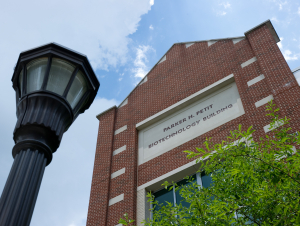
Join us in congratulating Greg Gibson, Michelle Wong, Anton Bryksin, Karen Ethier, Gary Newnam, and Cristian Crisan — recipients of 2020 Petit Institute Annual Awards and members of the IBB community recognized for their hard work, accomplishments, and dedication throughout 2020.
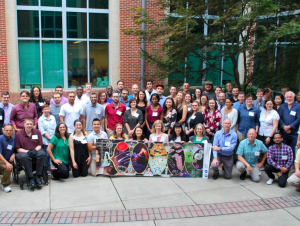
The Center for Chemical Evolution at Georgia Tech is ending its 10-year mission with scientific accomplishments and influence among origins of life researchers, while preparing the next generation of scientists.
Experts In The News
Alex Robel, an associate professor in the School of Earth and Atmospheric Sciences at Georgia Tech, said pumping sand onshore is far from a perfect solution to stabilize a beach, but it’s “one of the best tools we have in our arsenal.”
“It’s been done in the United States for almost a century in different places and we know how to do it,” Robel said. “We’re good at it.”
But nourishment is only a Band-Aid for erosion. Once cities start replenishing sand, Robel said they have to keep doing it regularly.
Atlanta Journal Constitution March 24, 2026A team of researchers including David Hu, a professor in Georgia Tech’s School of Biological Sciences and George W. Woodruff School of Mechanical Engineering, have visualized mosquito flight behavior for the first time.
Based on their data, the researchers said they don’t think mosquitoes swarm because they’re following the pack. Each appeared to pick up on the cues independently, then found themselves at the same place at the same time.
“It’s like a crowded bar,” said Hu. “Customers aren’t there because they followed each other into the bar. They’re attracted by the same cues: drinks, music, and the atmosphere. The same is true of mosquitoes. Rather than following the leader, the insect follows the signals and happens to arrive at the same spot as the others. They’re good copies of each other.”
A similar story was published by The Economic Times.
ScienceDaily March 22, 2026