To request a media interview, please reach out to experts using the faculty directories for each of our six schools, or contact Jess Hunt-Ralston, College of Sciences communications director. A list of faculty experts is also available to journalists upon request.
News Center
Latest News
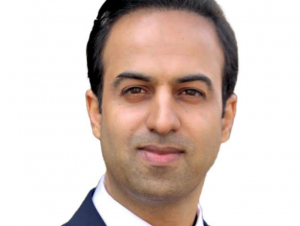
Ali Sarhadi's research draws on the intersection of engineering, physics-based modeling, and AI, reflecting Georgia Tech’s broad strengths in climate resilience and computational science.
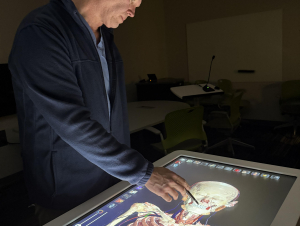
Georgia Tech’s new Anatomage Table blends traditional dissection with digital technology — preparing students for the future of medicine.
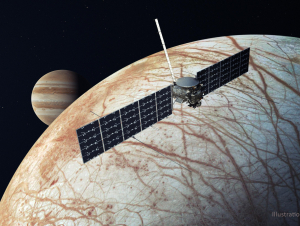
In four years, NASA's Europa Clipper mission will arrive in Jupiter’s orbit to investigate whether the planet’s icy moon, Europa, could support life. In the interim, Professor Sven Simon is working to uncover critical information to support the rapid analysis of measurements from the mission.
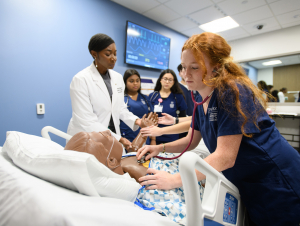
Georgia Tech and the Nell Hodgson Woodruff School of Nursing at Emory University are partnering to develop a pipeline that prepares more local nurses to meet workforce demands.
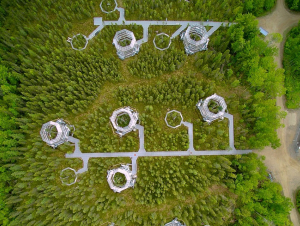
Peatlands make up just 3% of the earth’s land surface but store more than 30% of the world’s soil carbon, preserving organic matter and sequestering its carbon for tens of thousands of years. A new study sounds the alarm that an extreme drought event could quadruple peatland carbon loss in a warming climate.
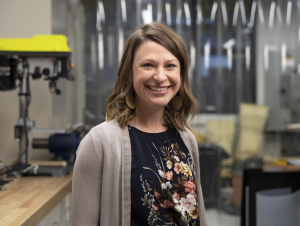
Growing up in rural southwest Georgia, Kinsey Herrin loved “making stuff.” She loved it so much that she regularly dug up muddy clay from her family’s property and the surrounding area to make ceramics. As a prosthetist/orthotist, she creates and tests devices that help patients improve or regain mobility — from prosthetic limbs to braces of all kinds. But Herrin’s role at the Institute is even more expansive. She’s at the epicenter of a research community where medical devices, studies, data, patients, clinicians, and students collide.
Experts In The News
Researchers have long known that when two galaxies approach each other and merge, the supermassive black holes at their centers form a pair and are eventually expected to merge as well. It is precisely these mergers that are considered one of the sources of the gravitational-wave background — a faint “hum” of spacetime detected in recent years. However, the role played by the geometry of the collision in this process has remained an open question.
Graduate student Sena Ghobadi of the Georgia Institute of Technology’s School of Physics, along with her colleagues, has developed three-dimensional dynamic models of such collisions.
A similar story appeared in Sky & Telescope.
Universe Magazine April 28, 2026Zachary Handlos, senior academic professional in the School of Earth and Atmospheric Sciences, explains how weather patterns can lead to conditions conducive to the types of wildfires currently seen in Florida and Georgia.
This piece also appeared in The Washington Post and The Conversation.
Atlanta Journal Constitution April 25, 2026