To request a media interview, please reach out to experts using the faculty directories for each of our six schools, or contact Jess Hunt-Ralston, College of Sciences communications director. A list of faculty experts is also available to journalists upon request.
News Center
Latest News
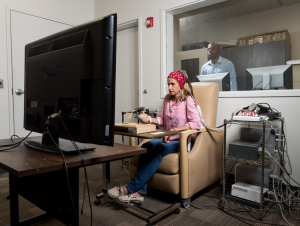
Neuroscience experts from across Georgia Tech will soon come together for a new interdisciplinary research institute, the Institute for Neuroscience, Neurotechnology, and Society (INNS), launched in July. Faculty in INNS are helping to solve some of neuroscience’s most pressing problems, and many have promising medical applications. One important aspect of studying the brain is understanding how the brain and the body work together. Meet the researchers who study brain-body interactions, from monitoring the neuron degradation that causes Alzheimer’s to enhancing mobility for stroke survivors, in an effort to improve the health and quality of life for millions of Americans.
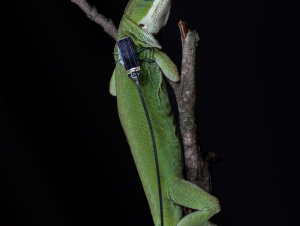
The award will support Stroud as he creates evolution’s first high-definition map — with the help of 1,000 backpack-wearing lizards.
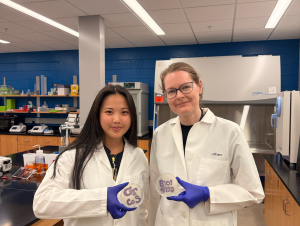
“This course truly underscores Georgia Tech’s commitment to pioneering meaningful undergraduate experiences,” says teacher Vinayak (Vinny) Agarwal. “No other peer institution I know of is exposing undergraduates to bioinformatics at this level.”

Georgia Tech researchers are developing solutions to monitor and forecast flooding, as well as restore ecosystems to prevent future flooding. These efforts support communities’ resilience in the face of climate change and keep the U.S. secure.
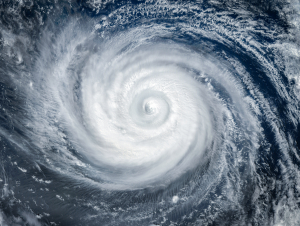
As climate change influences hurricane behavior, experts are taking a closer look at how we classify and communicate storm risks, and what that means for forecasting, preparedness, and public understanding.
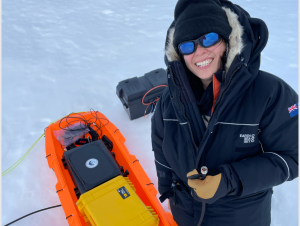
The grant will support Chu as she uses radar data and generative AI to map temperatures beneath the Antarctica ice sheet, aiming to improve climate predictions, support coastal planning, and train future scientists through open-access tools and education.
Experts In The News
Researchers have long known that when two galaxies approach each other and merge, the supermassive black holes at their centers form a pair and are eventually expected to merge as well. It is precisely these mergers that are considered one of the sources of the gravitational-wave background — a faint “hum” of spacetime detected in recent years. However, the role played by the geometry of the collision in this process has remained an open question.
Graduate student Sena Ghobadi of the Georgia Institute of Technology’s School of Physics, along with her colleagues, has developed three-dimensional dynamic models of such collisions.
A similar story appeared in Sky & Telescope.
Universe Magazine April 28, 2026Zachary Handlos, senior academic professional in the School of Earth and Atmospheric Sciences, explains how weather patterns can lead to conditions conducive to the types of wildfires currently seen in Florida and Georgia.
This piece also appeared in The Washington Post and The Conversation.
Atlanta Journal Constitution April 25, 2026