To request a media interview, please reach out to experts using the faculty directories for each of our six schools, or contact Jess Hunt-Ralston, College of Sciences communications director. A list of faculty experts is also available to journalists upon request.
News Center
Latest News

How Jennifer Leavey’s videos use research articles to build personal contact and educate online communities about COVID-19 research.
Automated contact tracing using smartphone apps could help control future COVID-19 outbreaks by allowing rapid notification of people who may have been exposed to the coronavirus.
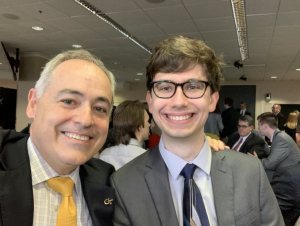
Gurevich is recognized for having the “most outstanding scholastic record of all members of the class.”
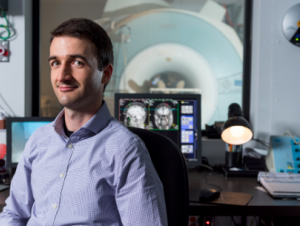
School of Psychology assistant professor Dobromir Rahnev is one of two Georgia Tech winners of the Office of Naval Research's Young Investigator Program Awards. Rahnev will research how the U.S. Navy and Marine Corps can use technology and science to update and enhance job skills training.
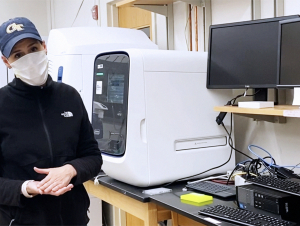
Samantha Mascuch is creating ingredients for Coronavirus test kits. Learn how the test works, and how a team of Georgia Tech biologists and chemists are making the kits.
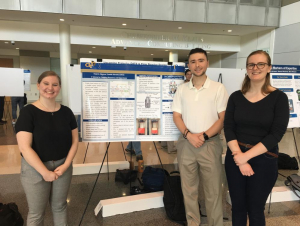
Vertically Integrated Projects student John Pederson discusses the interconnection of chemistry and chemical engineering.
Experts In The News
In December, The Conversation hosted a webinar on AI’s revolutionary role in drug discovery and development. Science and technology editor Eric Smalley interviewed Jeffrey Skolnick, Regents' Professor and eminent scholar in computational systems biology at Georgia Institute of Technology, and Benjamin P. Brown, assistant professor of pharmacology at Vanderbilt University. Skolnick has developed AI-based approaches to predict protein structure and function that may help with drug discovery and finding off-label uses of existing drugs. Brown’s lab works on creating new computer models that make drug discovery faster and more reliable.
The Conversation April 7, 2026While it often gets written off as being distracted or not paying attention, daydreaming is actually a sign of an active and imaginative mind. In fact, a 2017 study found that daydreamers are generally smarter than their focused peers. “People with efficient brains may have too much brain capacity to stop their minds from wandering,” said Eric Schumacher, the Georgia Tech psychology professor who co-authored the study.
People who daydream frequently have things running through their heads, whether they are thinking through ideas or picturing possible outcomes. Letting the mind wander allows unexpected connections to form. To an outside observer, they may seem checked out of reality. However, other highly intellectual people know that they're truly deeply engaged, just not with what's going on right in front of them.
Your Tango April 4, 2026