To request a media interview, please reach out to experts using the faculty directories for each of our six schools, or contact Jess Hunt-Ralston, College of Sciences communications director. A list of faculty experts is also available to journalists upon request.
News Center
Latest News
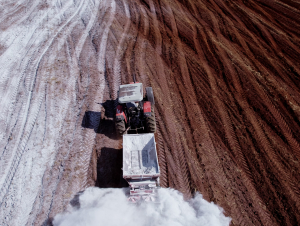
Liming, a centuries-old agricultural practice, can improve crop yield and greenhouse gas reduction.

Alumni raised a glass to science, connection, and Ramblin' Wreck pride.
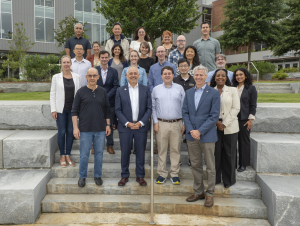
Inaugural Cohort of Georgia Tech’s Research Leadership Academy Announced
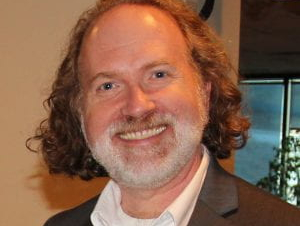
Featuring world-leading mathematicians at the forefront of their fields, ICM 2026 will be held in Philadelphia, Pennsylvania in July. Known for his expertise, Etnyre will speak on the topic of Geometry.
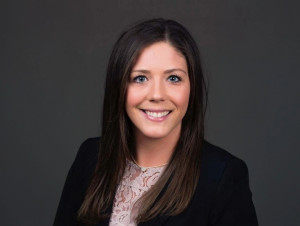
School of Psychology faculty member and academic advisor Meghan Babcock has been selected to receive NACADA: The Global Community for Academic Advising's Outstanding Faculty Advisor Award. Earlier this year, Babcock was awarded Georgia Tech's Outstanding Undergraduate Academic Advisor – Faculty Honor.
This June, New York City’s government and utility urged households to conserve electricity during an extreme heat wave with temperatures reaching 100 degrees F. People were asked to set air conditioners to 76 degrees, to avoid using more than one air conditioning unit, and to delay using electricity-hungry appliances during peak cooling hours.
The big concern is that when every air conditioning unit is running at full blast, electricity demand can exceed total generating capacity and force the utility to implement rolling blackouts. These rolling blackouts avoid a total system failure but leave people without access to cooling and other electronics as temperatures reach dangerous levels.
As temperatures peak in the United States during the coming weeks, utilities and city governments may follow suit with similar requests for voluntary conservation. Voluntary requests for conservation in the United States are part of the standard energy emergency playbook and go back at least to President Carter’s request for Americans to reduce heating temperatures during the 1977 energy crisis.
So, do voluntary conservation requests work to save energy and prevent blackouts?
Experts In The News
Researchers have long known that when two galaxies approach each other and merge, the supermassive black holes at their centers form a pair and are eventually expected to merge as well. It is precisely these mergers that are considered one of the sources of the gravitational-wave background — a faint “hum” of spacetime detected in recent years. However, the role played by the geometry of the collision in this process has remained an open question.
Graduate student Sena Ghobadi of the Georgia Institute of Technology’s School of Physics, along with her colleagues, has developed three-dimensional dynamic models of such collisions.
A similar story appeared in Sky & Telescope.
Universe Magazine April 28, 2026Zachary Handlos, senior academic professional in the School of Earth and Atmospheric Sciences, explains how weather patterns can lead to conditions conducive to the types of wildfires currently seen in Florida and Georgia.
This piece also appeared in The Washington Post and The Conversation.
Atlanta Journal Constitution April 25, 2026