To request a media interview, please reach out to experts using the faculty directories for each of our six schools, or contact Jess Hunt-Ralston, College of Sciences communications director. A list of faculty experts is also available to journalists upon request.
News Center
Latest News
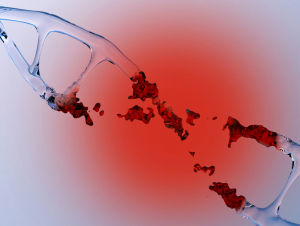
Insights could not only pave the way for new treatment strategies for genetic disorders, cancer and neurodegenerative diseases, but also enhance gene-editing technologies.
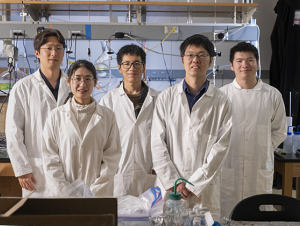
Georgia Tech researchers are innovating ways to study air quality — beginning with prehistoric insights and zooming all the way to satellites in our orbit.

As temperatures rise, proper hydration and heat acclimatization can help maintain physical and mental health. School of Biological Sciences Professor Mindy Millard-Stafford and Adjunct Professor Mike Sawka discuss best practices and strategies to avoid heat-related illness and dehydration while optimizing performance.
Eighteen faculty members from the College of Sciences have been recognized by their students for outstanding teaching and educational impact.
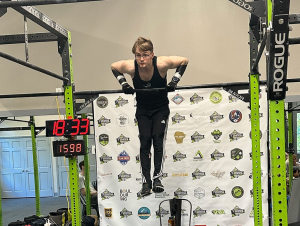
A School of Physics alumnus has broken the world record for the most muscle-ups in 24 hours.
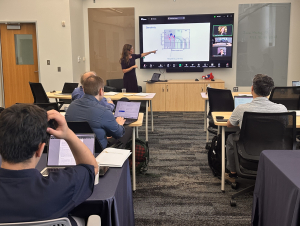
Georgia Tech is leading a revolutionary NASA mission to image black holes from space, overcoming the limits of Earth-based telescopes. With twin orbiting instruments, the SPRITE project could unlock unprecedented views of the universe’s most mysterious objects.
Experts In The News
Researchers have long known that when two galaxies approach each other and merge, the supermassive black holes at their centers form a pair and are eventually expected to merge as well. It is precisely these mergers that are considered one of the sources of the gravitational-wave background — a faint “hum” of spacetime detected in recent years. However, the role played by the geometry of the collision in this process has remained an open question.
Graduate student Sena Ghobadi of the Georgia Institute of Technology’s School of Physics, along with her colleagues, has developed three-dimensional dynamic models of such collisions.
A similar story appeared in Sky & Telescope.
Universe Magazine April 28, 2026Zachary Handlos, senior academic professional in the School of Earth and Atmospheric Sciences, explains how weather patterns can lead to conditions conducive to the types of wildfires currently seen in Florida and Georgia.
This piece also appeared in The Washington Post and The Conversation.
Atlanta Journal Constitution April 25, 2026