While many students spent Spring Break chasing sun and surf, a group enrolled in the EAS 4755: Sea Level Rise and Global Geotechnics course, taught by Alex Robel and Jorge Macedo, headed to the coast for a different reason — to learn how three coastal communities across the Southeast are responding to sea-level rise and flooding and how science, engineering, and community priorities intersect.
This is the third time the class has been offered, but the first to include an extended community-based learning experience.
“The students were able to see firsthand how concepts discussed in the classroom translated into real infrastructure decisions shaping vulnerable coastal communities,” says Robel, an associate professor in the School of Earth and Atmospheric Sciences.
In previous years, the course relied on guest speakers, often remote, to provide real-world insights. Robel and Macedo, an associate professor in the School of Civil and Environmental Engineering, advocated for this year’s field trip to give students direct exposure to how the concepts taught in class are used in coastal communities.
“Places like Savannah, Tybee Island, and Charleston aren’t planning for a distant future; they’re making real infrastructure decisions right now,” explains Robel.
Coastal Case Studies
On Tybee Island, city leaders and U.S. Army Corps of Engineers staff discussed with students how to balance tourism, environmental protection, and shoreline preservation. Site visits highlighted tide gates and living shorelines as flood mitigation strategies.
Then, in Savannah, students met with city staff to explore challenges facing historic, low-lying cities and visited the Pin Point Heritage Museum where Gullah-Geechee community leaders spoke about the cultural, environmental, and equity dimensions of flood planning.
The trip concluded in Charleston with discussions led by the city’s chief resilience officer and tours of the Low Battery Seawall and a neighborhood pump station, illustrating how flood infrastructure can serve both functional and public-facing roles. Students also visited JMT, the engineering firm behind several of the projects studied, where engineers discussed design trade-offs and career paths in coastal and municipal infrastructure.
Regional Risks, Real Responses
“The regional context is especially important because Georgia Tech graduates are heavily concentrated in the Southeast, and many go on to careers designing, managing, or approving infrastructure projects in coastal communities,” says Robel. “With a more concentrated vulnerability to sea-level rise in the Southeast than any other part of the United States, the most potential flooding is likely to occur here in the Atlantic Southeast and Gulf Coast.”
He adds that “if we’re educating the scientists, engineers, and decision-makers who will be working in these communities, they must understand the practicalities of flood resilience and how to make informed decisions based on the best current science.”
Although the idea for the field experience had been years in the making, it became feasible only recently with support from an internal grant on sustainability education and community-based learning administered by the Center for Sustainable Communities Research and Education. Robel also emphasized the importance of long-standing relationships with coastal communities and governments in making the trip a success.
“We reached a point where we had both the resources and the relationships to make the experience meaningful,” he shares.
Career Context
The students met professionals from a wide range of career paths, including federal and local government agencies, private engineering firms, and municipal stormwater departments.
“A major goal of the trip was giving students the chance to see what career paths in coastal resilience really look like,” says Robel. “Those conversations helped students understand not just the technical work, but also the financing, politics, and community concerns that shape infrastructure decisions — parts of the job that are harder to capture in the classroom.”
Students enjoyed the opportunity to get real-world context:
“This trip made me reconsider my post-graduation plans. I used to think the geology industry was just oil and gas, but this trip showed me different ways I can apply my skills to help the environment as well as local communities in their efforts to adapt to sea-level rise concerns,” says Mandala Pham, a Ph.D. student studying geophysics.
“The most valuable part of the experience was observing sea-level rise mitigation infrastructure in-person, and the trip was a great experience overall to make new friends and gain valuable experiences,” adds Alexander Brison, a fourth-year environmental engineering major.
By grounding classroom concepts in real places and real decisions, the Spring Break field experience reinforced the course’s goal: preparing students to engage thoughtfully with the challenges coastal communities are already facing.
Related Media
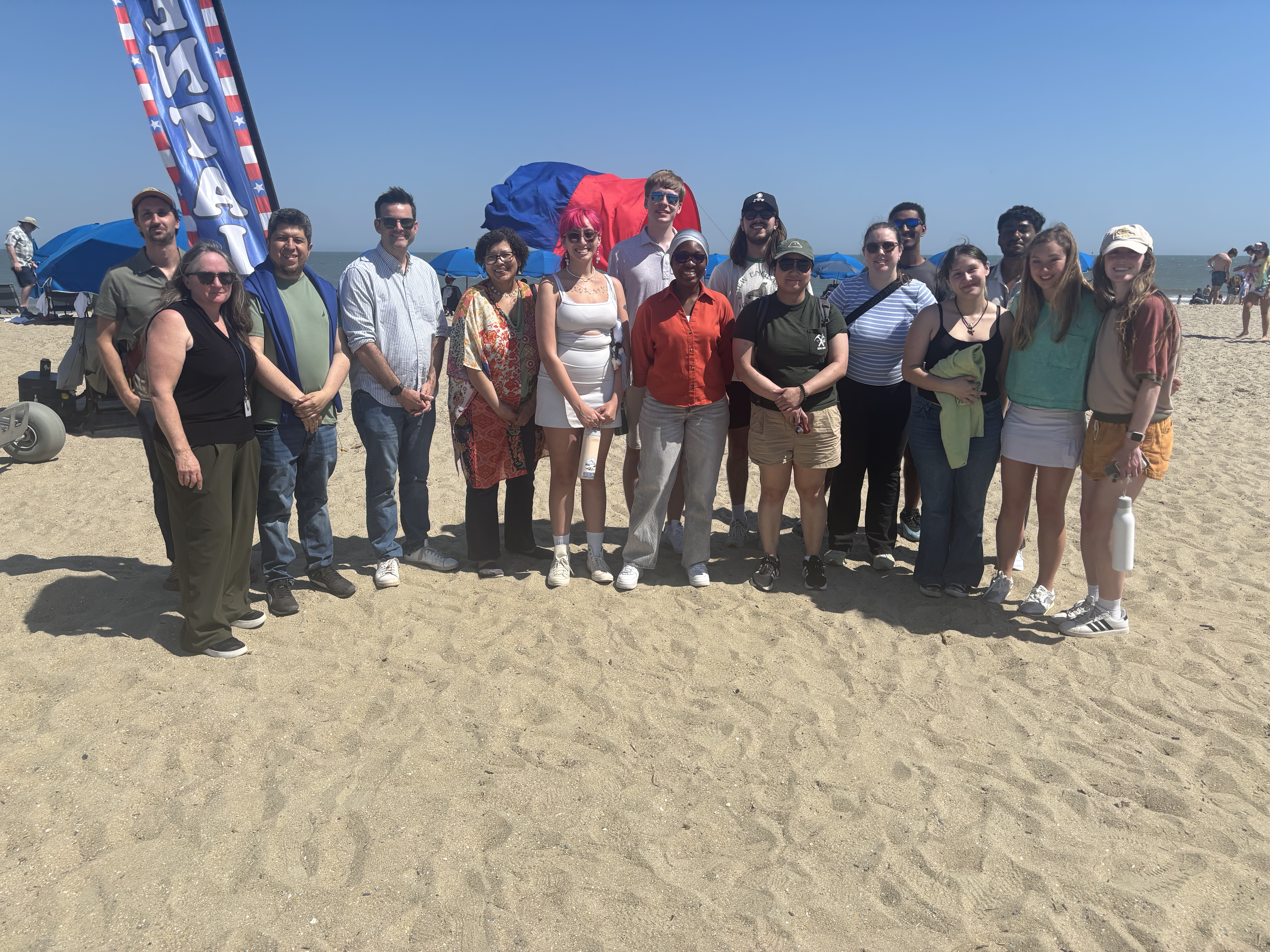
Class members spent the first day on the beach at Tybee Island learning how beach nourishment and dune restoration are helping preserve one of the most popular beaches in the southeast.
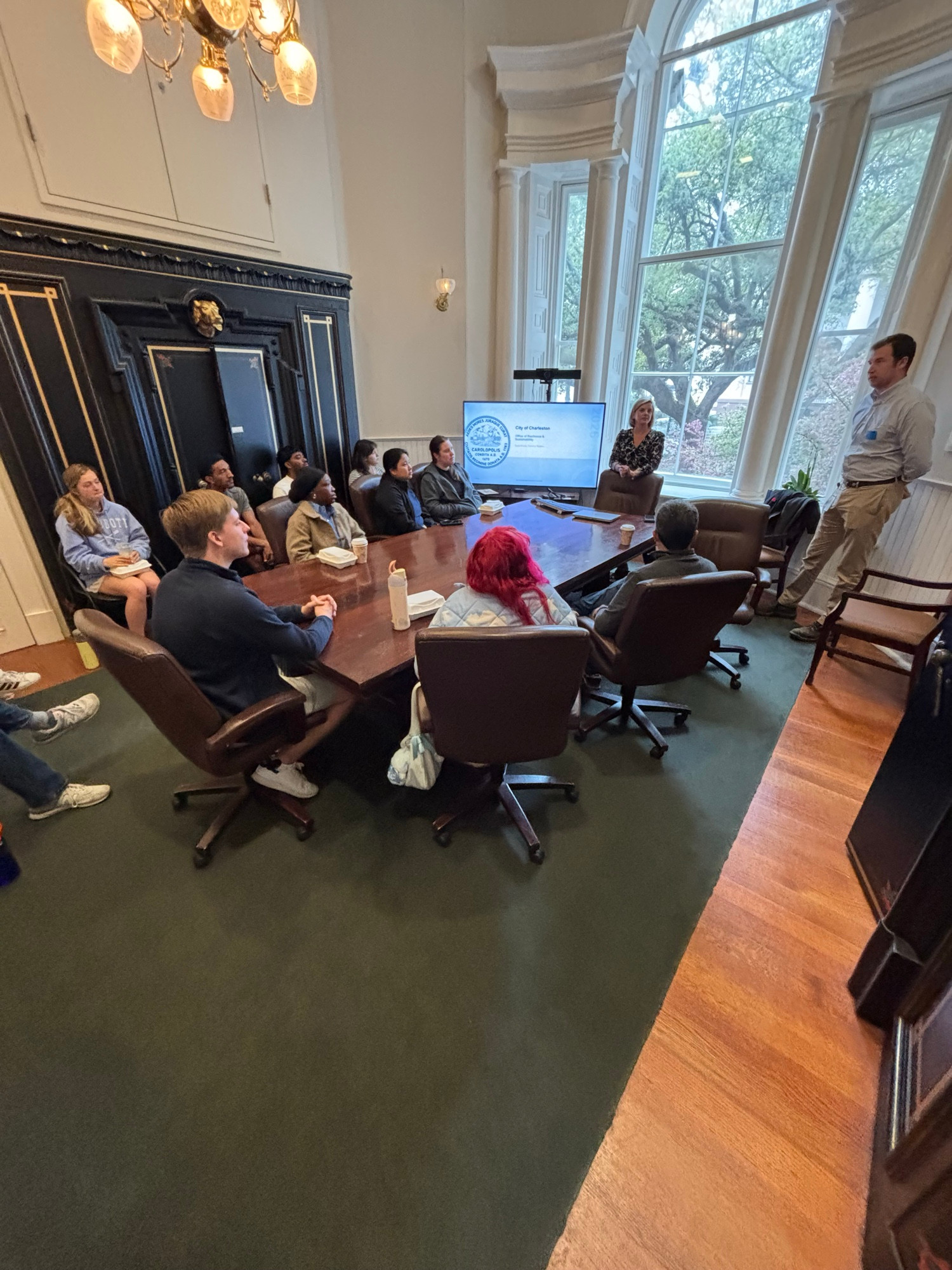
Charleston city officials spoke with students about how multiple municipal departments work together on flood mitigation
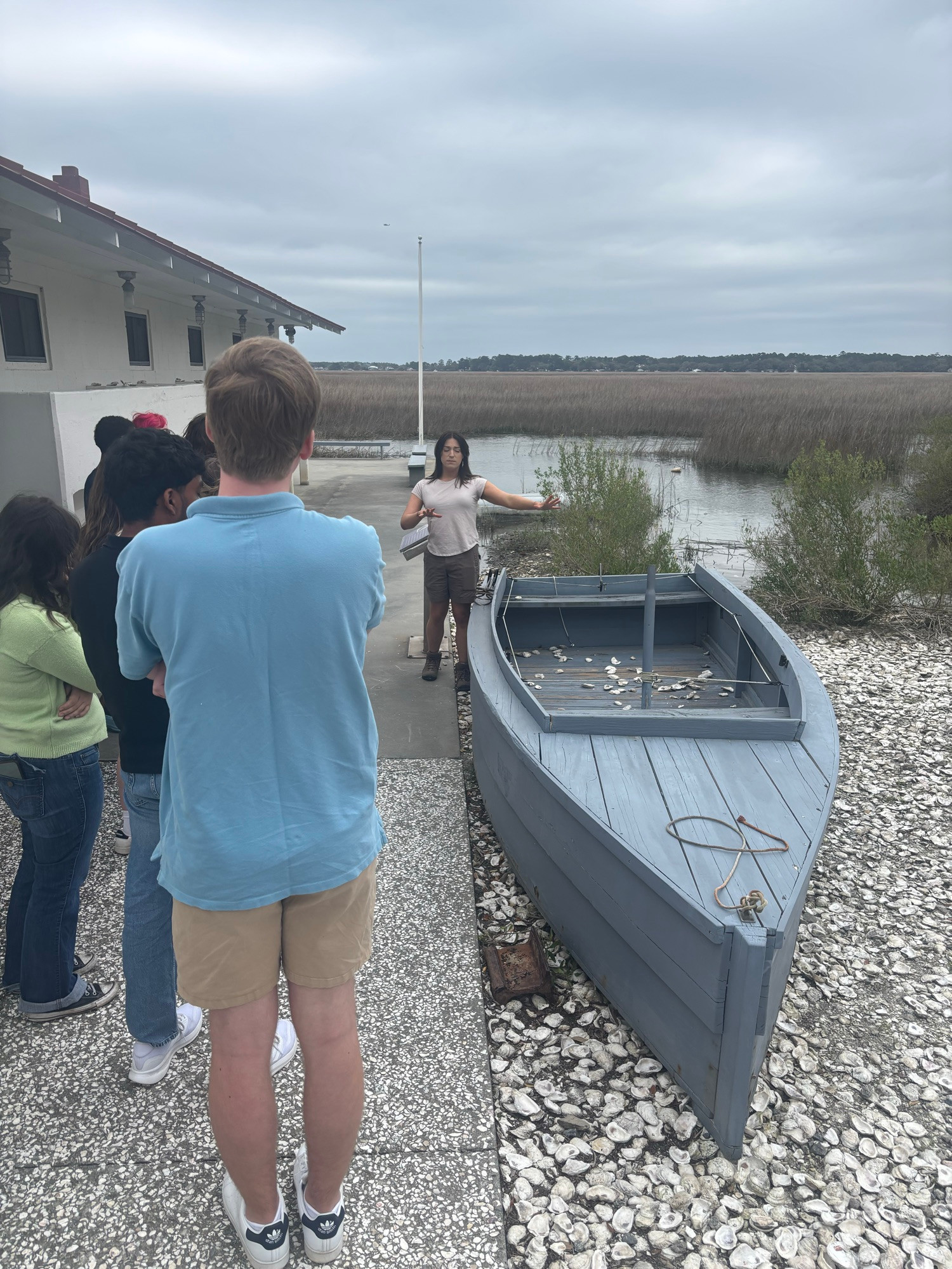
A highlight of the trip included a visit to the Pin Point Heritage Museum to learn about one of the largest remaining Gullah-Geechee communities in the Southeast and their historical relationship to the marsh, fisheries, and flooding.
For More Information Contact
Laura Segraves Smith
College of Sciences
Georgia Tech