When Clemmie Whatley earned her master’s in applied mathematics in 1973, she and her friend Grace Hammonds became the first African American women to graduate from Georgia Tech — an accomplishment she only learned about decades later.
“We certainly didn’t think of ourselves as pioneers,” says Whatley. “We were just trying to get through.”
Today, Whatley is no longer a hidden figure as she is now recognized for her trailblazing role. She has been honored by the Institute’s Pathway of Progress art installation, Women of Distinction Award, and scholarship endowment established by the Georgia Tech Black Alumni Organization.
As Georgia Tech celebrates Women’s History Month, Whatley’s barrier-breaking legacy is a reminder of how women in STEM expand what’s possible, not only for themselves, but for those who follow.
Following the math path
Whatley grew up in Chubbtown, a self-sufficient Black community established pre-Civil War in Cave Spring, Georgia. The first Black valedictorian of Cave Spring High School after desegregation, she loved math from an early age. Whatley often tagged along with her father who was always building or fixing something — inspiring her to use numbers to solve problems.
She majored in math at Clark (now Clark Atlanta University), graduating magna cum laude. Encouraged to attend a predominantly white institution for graduate school by Joseph James Dennis, head of Clark’s Mathematics department, Whatley and Hammonds applied to Georgia Tech and Emory University. Tech responded first with an unexpected bonus: a teaching assistantship.
“Earning money to teach math and help pay for school appealed to me,” she shares.
Finding her footing at Tech
Entering the Institute as one of the few Black women on campus came with challenges. Whatley enrolled only nine years after Georgia Tech became the first university in the Deep South to admit African American students without a court order.
“I’m not sure they wanted us there,” she admits. “But I wasn’t nervous. I was excited to learn more math — and teach it as well.”
As a graduate teaching assistant, Whatley taught undergraduate calculus, algebra, and trigonometry. Students were often surprised to see her at the front of the classroom, as most instructors were white males. She remembers professors who encouraged her, particularly her advisor Professor Emeritus Robert Kasriel.
“He believed in me, especially my knowledge of math,” Whatley says. “He encouraged me to speak up with confidence.”
Another professor pushed her to contest a grade he felt was unfair. She chose instead to stay focused on completing her degree. Despite the obstacles, Whatley remembers her time at Tech fondly. “I really enjoyed the classroom interaction with the undergraduates and teaching subjects I loved.”
She appreciates the toughness of the education she received. “Georgia Tech rewards tenacity. If you can make it through here, you can make it through just about anything — and that problem‑solving confidence stays with you.”
Choosing to serve
After graduation, Whatley joined BellSouth as a junior engineer, working on depreciation studies and writing early computer programs in Basic and Fortran.
“I took a class at Morehouse to learn programming. We used ticker tape, punch cards, and computers that took up an entire room,” remembers Whatley.
She spent 22 years at BellSouth, earning frequent promotions. Her career shifted into a new direction when she heard a radio request for tutors at Marietta Junior High School. She volunteered and began working with several students, including a middle school girl who still counted on her fingers. Whatley guided her toward more confident problem-solving. “All she needed was someone to take the time to work with her.”s.
Tutoring became a catalyst for change. Motivated by the difference she could make, she left corporate America.
Expanding her impact
After obtaining certification from Mercer University, she became a high school math teacher. Whatley planned to teach for just three years but stayed for four after her advisement class of ninth graders begged her to stay until they graduated.
Committed to expanding her impact, Whatley earned an educational specialist degree from the University of West Georgia and a Ph.D. in Educational Studies from Emory University. While at Emory, she began an educational consulting career, launching Educational Dynamix, a nonprofit firm focused on learning and development for children and educators. Her consulting work also explored the connections between music and mathematics — helping educators and parents use both to strengthen student learning.
“Teaching math was satisfying,” says Whatley. “I enjoyed going into a class where students — or their teachers — didn’t believe in their ability to do math and showing them that they could do it.”
Whatley smiles and clarifies: “When I went into education, whether I was working with students, training teachers, or helping make changes in organizational structures, I found my passion. Looking back, hopefully, I made some lives better overall.”
Sharing family history
Whatley’s influences are felt beyond the classroom. She is the author of several books, including The Chubbs: A Free Black Family’s Journey From the Antebellum Era to the Mid-1900s, which grew out of her family’s history. Whatley began this research while assisting with media features on her cousin, University of Georgia football star Nick Chubb.
Researching her family’s story led to a surprising discovery: a crumpled bill of sale for an enslaved girl that her son tucked into her grandmother’s old trunk. That document — and the stories surrounding it — propelled her to write the book and preserve Chubbtown’s history for future generations.
Reflecting on a legacy
Whatley says faith and family are the most important things in her life. She has been married to her husband, Melvin, for 55 years. Her daughter, son, and several relatives also attended Georgia Tech, with her daughter running track and cross country and her son playing football. “We’re a Yellow Jacket family with one Bulldog granddaughter,” she says with a smile.
Today, Whatley is honored to have the recognition that came years after graduation. “What I went through wasn’t in vain. It feels good to know that I opened some doors and helped others along the way.”
Related Media
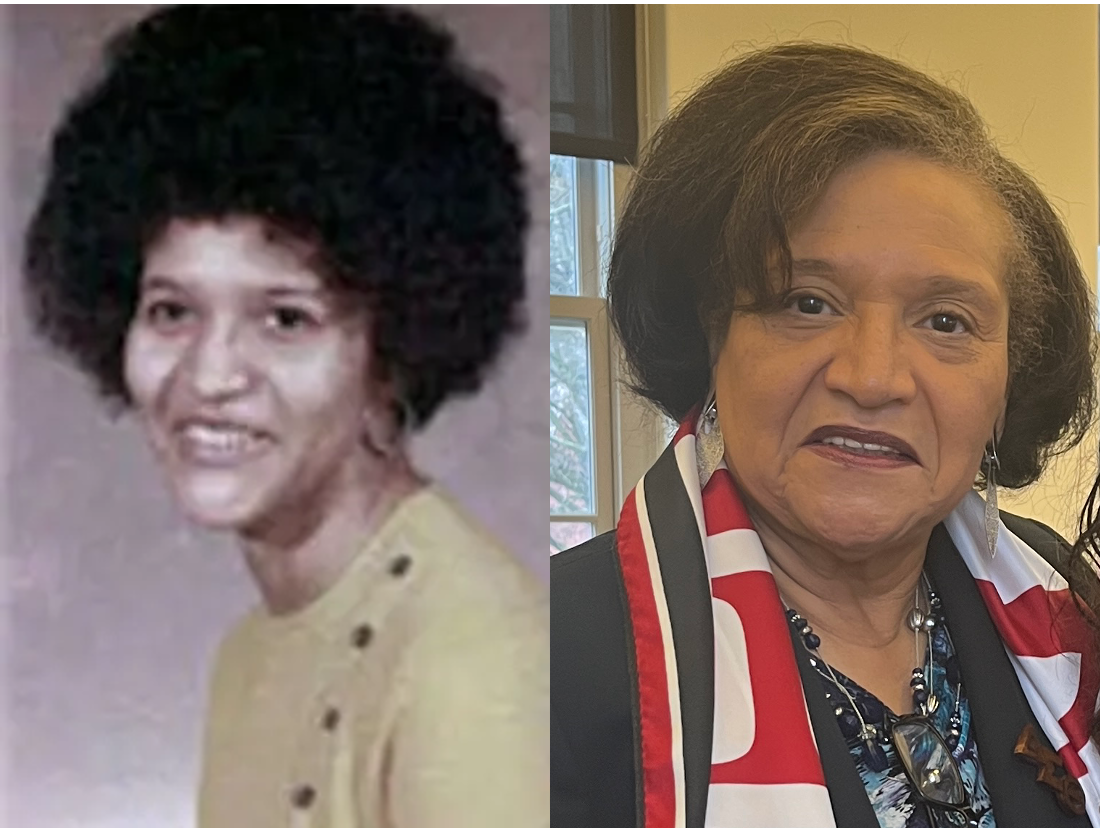
Clemmie Whatley; then and now
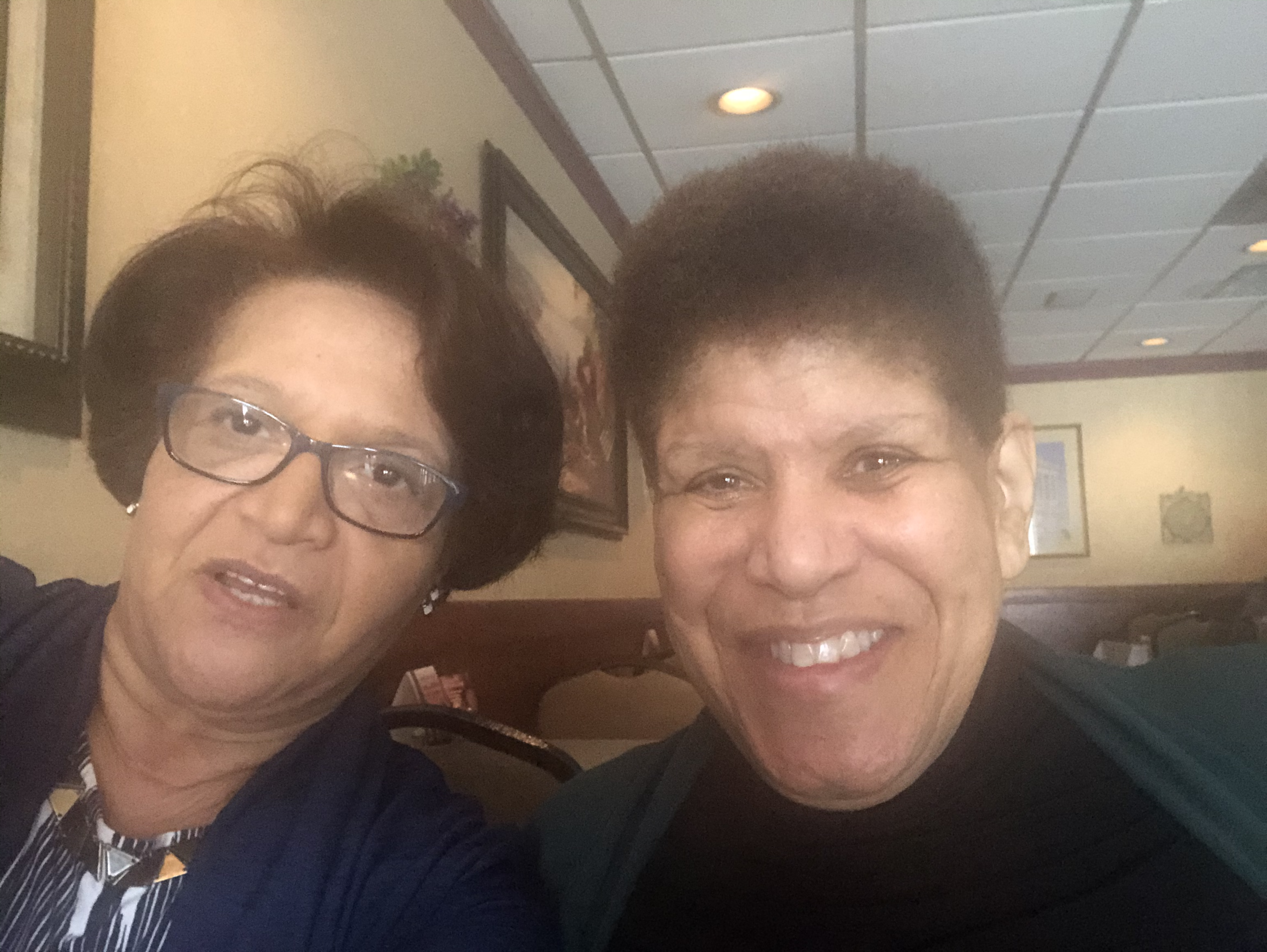
Whatley and Grace Hammonds made history together as the first African American women to graduate from Georgia Tech and have remained lifelong friends.
For More Information Contact
Laura S. Smith, writer