Evolutionary ecologist James Stroud has been awarded the Bicentenary Medal by the Linnean Society of London in recognition of his pioneering work in evolutionary ecology and community contributions. Stroud serves as an Elizabeth Smithgall-Watts Early Career Assistant Professor in the School of Biological Sciences.
One the oldest existing biological societies in the world, the Linnean Society of London is renowned as the venue where, in July 1858, Charles Darwin and Alfred Russel Wallace first publicly announced the theory of evolution by natural selection — more than a year before Darwin published On the Origin of Species. The annual Bicentenary Medal is considered one of the most prestigious awards for researchers studying natural history.
“This honor is profoundly meaningful to me — both as an evolutionary biologist and a Londoner,” says Stroud. “To be recognized here, at the very heart of evolutionary biology’s history, is deeply personal, incredibly exciting, and very special.”
Stroud is one of 10 exemplary researchers to be recognized by the Linnean Society this year with a medal or award.
“We are thrilled to celebrate the 2026 Linnean Society medal and award recipients, whose work advances our vision of a world where nature is understood, valued and protected,” says Mark Watson, who serves as president of the Linnean Society. “At a time when the importance of biodiversity and conservation has never been clearer, their achievements show the power of curiosity, dedication and scientific endeavor.”
Understanding Lizards — and Life on Earth
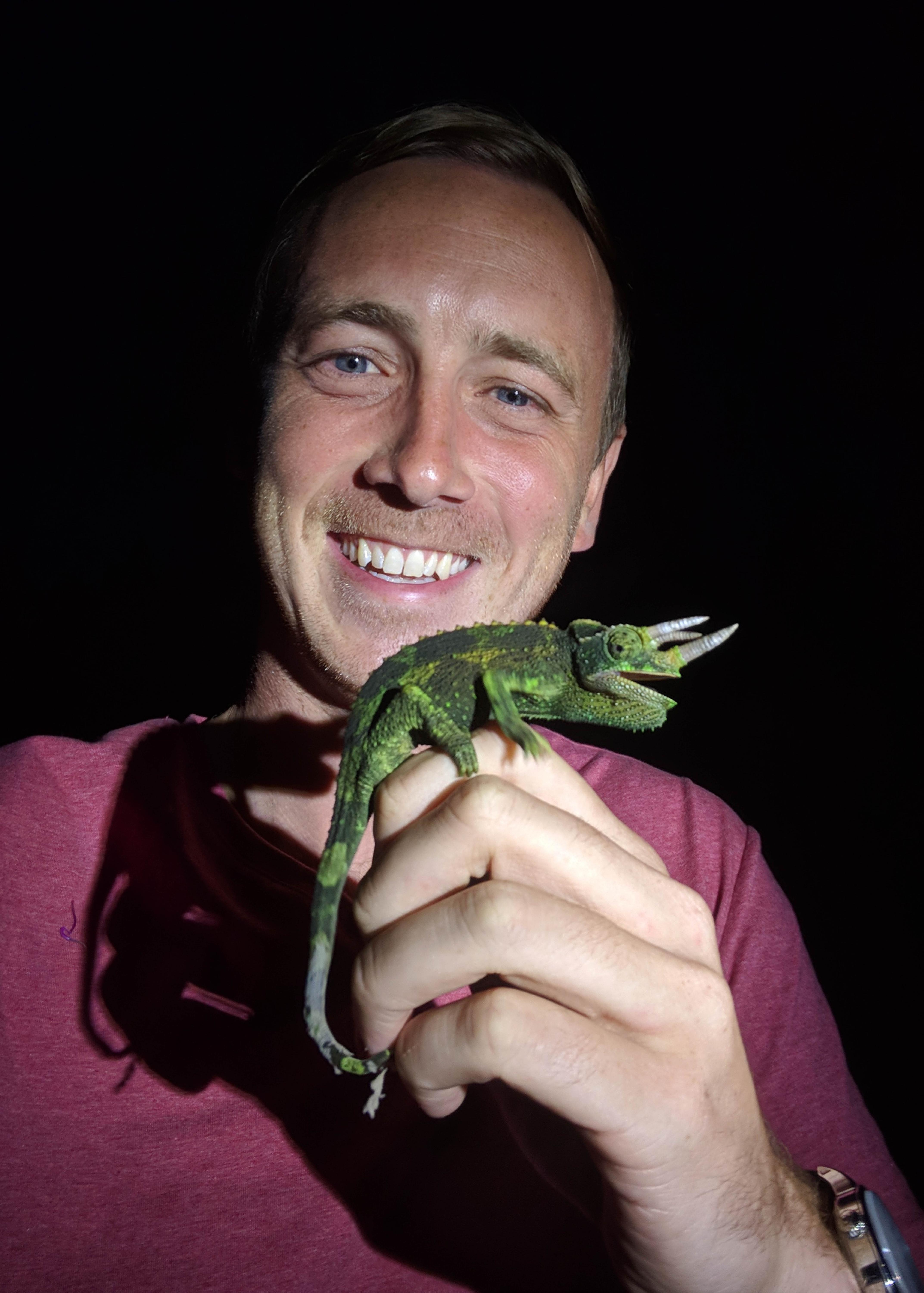
At Georgia Tech, Stroud investigates the ecological and evolutionary processes of lizards in order to understand patterns of biological diversity at a larger scale. “Studying lizards in their natural habitats allows us to directly investigate how species adapt and evolve in real time,” he explains, “and this helps us understand how ecological and evolutionary processes shape life on Earth."
For over 10 years, he has run one of the longest-running evolutionary studies of its kind: catching, documenting, and releasing each of the 1,000 lizards who reside on “Lizard Island,” Stroud’s living lab in Florida.
In 2025, he was awarded a Packard Fellowship to further develop the project by equipping each lizard with a tiny sensor backpack to document their behaviors and movements in real time — with the goal of creating evolution’s first high-definition map.
In 2014, Stroud also founded a community science project called “Lizards on the Loose” to introduce middle school students to ecological science. A collaboration with Fairchild Tropical Botanic Garden, the program now reaches students from over 100 schools across South Florida.
Related Media
James Stroud
For More Information Contact
Selena Langner
College of Sciences
Georgia Institute of Technology