Two School of Biological Sciences assistant professors, Nathan McDonald and Farzaneh Najafi, have received Curci Foundation grants to support new research in their fields.
The Shurl and Kay Curci Foundation funds science-based projects with an emphasis on advancing a healthy and sustainable future for humans, focusing on early-stage research with far-reaching and lasting implications.
“This is a special program that supports junior faculty with particular creativity,” says School of Biological Sciences Chair Todd Streelman. “The best part for me is that representatives from the Curci Foundation visit our campus and conduct in-person interviews, showing they value both the projects and the young scientists.”
Nathan McDonald: Understanding Synapses and Engineering their Repair
The McDonald Lab studies the fundamental biology of synapses, the tiny structures that allow neurons to communicate. Their research focuses on understanding how the nervous system and brain develop, specifically how hundreds of billions of neurons form and connect through trillions of synapses – and how they continue to change throughout adult life.
“What’s exciting about the grant is that it allows us to apply that knowledge and explore whether and how we might control synapse formation,” explains McDonald.
The McDonald Lab will examine whether the molecular processes neurons use to build synapses during early development can be reactivated later in life.
If successful, the new research could have implications for aging and neurodegenerative conditions in which synapses are lost, potentially revealing ways to repair specific synapses and restore their function.
“Many researchers are interested in repairing or regenerating synapses. Most approaches so far have focused on pharmaceuticals – using drugs to influence synaptic strength. What makes our approach unique is that we are trying to leverage the developmental machinery that neurons already have,” he explains.
McDonald and his team are working with Caenorhabditis elegans, a microscopic roundworm widely used in neuroscience research. The organism offers a simplified, tractable system for examining how synapses are built, dismantled, and potentially rebuilt.
“If we can demonstrate proof of concept in a simple nervous system, that opens the door to scaling these approaches to more complex models,” explains McDonald.
He plans to use the Curci funds to support students and staff as they explore these new methods for engineering synapse formation.
“The work has the potential to be developed into something more translational and applicable to disease,” says McDonald. “These sources of funding are incredibly important for launching new research directions.”
Farzaneh Najafi: Exploring Sleep and the Cerebellum’s Role in Cognitive Health
The Farzaneh Najafi Lab examines predictive processing, how the brain makes and learns predictions about the world. Najafi’s research focuses on deepening understanding of how sleep supports learning and cognitive health across the lifespan.
Najafi’s Curci-funded research will examine how the brain uses sleep to reorganize itself after learning, with a particular focus on the cerebellum, a region that contains nearly 80 percent of the brain’s neurons. By identifying changes in cerebellar activity during sleep, her work has the potential to improve early detection of neurological disorders.
“We know that sleep stabilizes memories in areas like the cortex and hippocampus, but we know very little about what sleep does in the cerebellum,” says Najafi. “This grant allows us to bring sleep, cerebellar circuitry, and learning together.”
Najafi and her team will combine behavioral experiments with high-resolution imaging to study how cerebellar circuits and synapses change across wake and sleep.
“We’re looking at cerebellar activity during sleep at the circuit and synapse level to see how learning-related changes unfold,” explains Najafi.
In some cerebellar disorders, sleep disturbances can appear five to 10 years before motor symptoms begin. By identifying early changes in cerebellar activity during sleep, Najafi’s research could help pinpoint neurological disease at a stage when intervention may still be possible.
Curci funding will allow Najafi’s lab to collect foundational data needed to establish the first mechanistic links between sleep, cerebellar activity, and long-term brain health.
“Many traditional funding mechanisms are hesitant to support these kinds of higher‑risk directions, especially early on, but this award makes it possible to pursue a new and promising line of inquiry,” says Najafi.
Related Media

Nathan McDonald
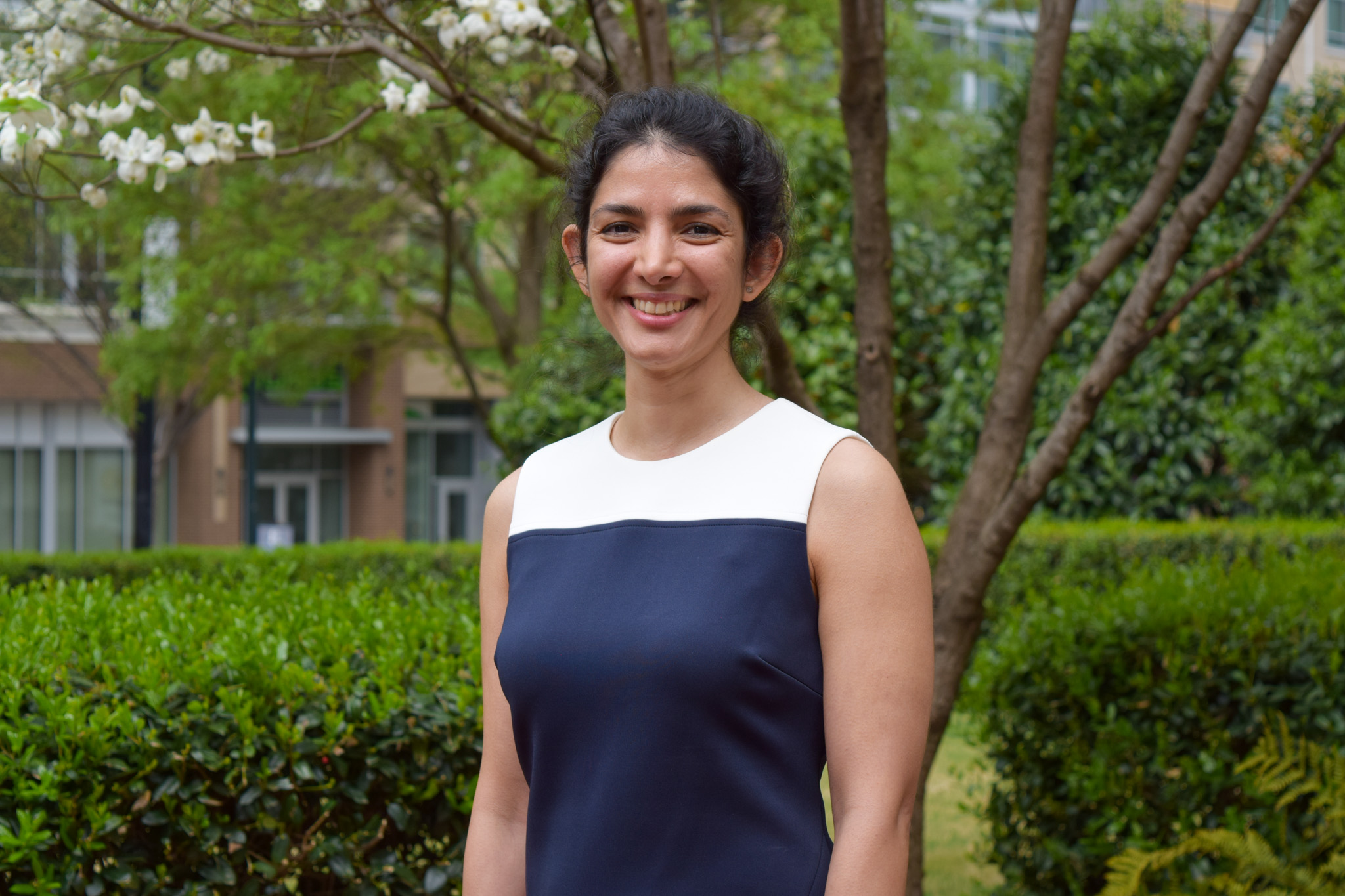
Farzaneh Najafi
For More Information Contact
Laura S. Smith, writer