
College of Sciences

Latest News

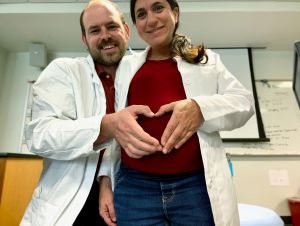
Christina Ragan (right) and her husband Zachary Grieb have studied the neuroscience of mental health and parenthood for years, and are now set to become parents themselves.

Christina Ragan has spent her career as a neuroscience researcher studying the neuroscience behind the mental health of motherhood. Now she’s set to begin a new research project — and become a parent herself.
GettyImages-520865516.jpg

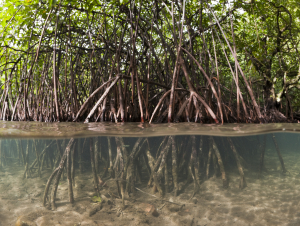
Researchers at the Georgia Institute of Technology and Yale University are proposing a novel pathway through which coastal ecosystem restoration can permanently capture carbon dioxide from the atmosphere. Seagrass and mangroves — known as blue carbon ecosystems — naturally capture carbon through photosynthesis, which converts carbon dioxide into living tissue.

Iramofu "Mofu" Dominic

Dominic receives a 2023 Merck Research Award for Underrepresented Chemists of Color, which provides him mentors and a chance to present work at an award symposium.



Student reading

We asked a few avid readers for book recommendations.
22CLEVER_GRAPHIC_1(300dpi).png

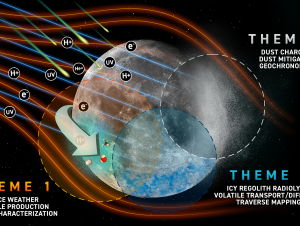
Georgia Tech researchers have been selected by NASA to lead a $7.5 million center that will study the lunar environment, and explore the generation and properties of volatiles and dust. 
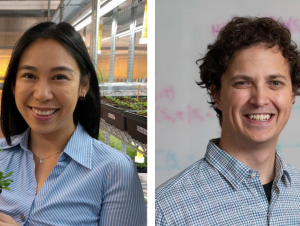
Lily Cheung and Simon Sponberg

Cheung’s research has the potential to improve medical treatments — including many cancer treatments — and also to help create plants that are more resilient to climate change, which could help feed communities of the future. Sponberg’s research into agile movement also has medical applications — potentially changing the way we approach physical therapy for degenerative diseases — as well as a number of other applications, including building better robots.

Experts In The News

In December, The Conversation hosted a webinar on AI’s revolutionary role in drug discovery and development. Science and technology editor Eric Smalley interviewed Jeffrey Skolnick, Regents' Professor and eminent scholar in computational systems biology at Georgia Institute of Technology, and Benjamin P. Brown, assistant professor of pharmacology at Vanderbilt University. Skolnick has developed AI-based approaches to predict protein structure and function that may help with drug discovery and finding off-label uses of existing drugs. Brown’s lab works on creating new computer models that make drug discovery faster and more reliable.

The Conversation April 7, 2026

While it often gets written off as being distracted or not paying attention, daydreaming is actually a sign of an active and imaginative mind. In fact, a 2017 study found that daydreamers are generally smarter than their focused peers. “People with efficient brains may have too much brain capacity to stop their minds from wandering,” said Eric Schumacher, the Georgia Tech psychology professor who co-authored the study.

People who daydream frequently have things running through their heads, whether they are thinking through ideas or picturing possible outcomes. Letting the mind wander allows unexpected connections to form. To an outside observer, they may seem checked out of reality. However, other highly intellectual people know that they're truly deeply engaged, just not with what's going on right in front of them.

Your Tango April 4, 2026

Upcoming Events

May
01
2026
EAS 1600 students maintain the Library, and it's open to everyone on Fridays from 3:30 - 4:30 pm when classes are in session. Come learn about houseplants and bring your own plant home!

Spark: College of Sciences at Georgia Tech

Welcome — we're so glad you're here. Learn more about us in this video, narrated by Susan Lozier, College of Sciences Dean and Betsy Middleton and John Clark Sutherland Chair.