To request a media interview, please reach out to experts using the faculty directories for each of our six schools, or contact Jess Hunt-Ralston, College of Sciences communications director. A list of faculty experts is also available to journalists upon request.
News Center
Latest News

Minda Monteagudo is a one-of-a-kind student, literally. She is the first student to ever graduate with a Ph.D. in ocean sciences and engineering from Georgia Tech.
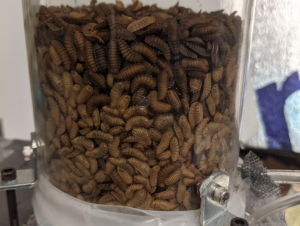
Black soldier fly larvae devour food waste and other organic matter and are made of 60% protein, making them an attractive sustainable food source in agriculture. But increasingly, larvae are dying before they reach livestock facilities as feed. Georgia Tech researchers provide insights into how this insect superfood can be raised and fed in dense groups without overheating.
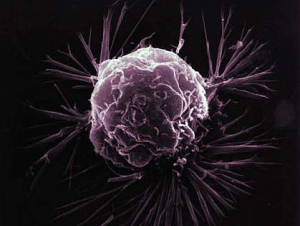
John McDonald and Zainab Arshad have identified novel changes in gene network interactions associated with cancer that may lead to new treatment targets for chemotherapy. Their work, published in iScience (Cell Press), shows that more than 90% of changes in gene network interactions in nine types of cancer studied are not detectable by current tests focused on changes in gene expression.
In his tenure as a faculty member at Tech, Alonzo Whyte, academic advisor for both the Health and Medical Sciences Minor and the B.S. in Neuroscience program, has seen a diversity of routes that students take on the path to a pre-health career. Today he shares some advice on success stories, mistakes to avoid, and resources to explore.
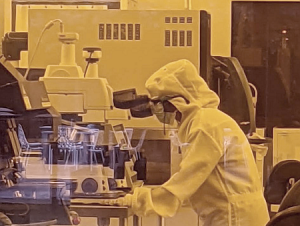
An interdisciplinary team of Georgia Tech researchers are pushing the boundaries of microelectronics technologies and showcasing their work at this month's IEEE International Electron Devices Meeting (IEDM).

Georgia Tech scientists and engineers are building a new DOE-funded instrument that captures 3D images of plant-microbe chemical reactions underground in an interdisciplinary effort to develop biofuels and fertilizers — and help mitigate climate change.
Experts In The News
Alex Robel, an associate professor in the School of Earth and Atmospheric Sciences at Georgia Tech, said pumping sand onshore is far from a perfect solution to stabilize a beach, but it’s “one of the best tools we have in our arsenal.”
“It’s been done in the United States for almost a century in different places and we know how to do it,” Robel said. “We’re good at it.”
But nourishment is only a Band-Aid for erosion. Once cities start replenishing sand, Robel said they have to keep doing it regularly.
Atlanta Journal Constitution March 24, 2026A team of researchers including David Hu, a professor in Georgia Tech’s School of Biological Sciences and George W. Woodruff School of Mechanical Engineering, have visualized mosquito flight behavior for the first time.
Based on their data, the researchers said they don’t think mosquitoes swarm because they’re following the pack. Each appeared to pick up on the cues independently, then found themselves at the same place at the same time.
“It’s like a crowded bar,” said Hu. “Customers aren’t there because they followed each other into the bar. They’re attracted by the same cues: drinks, music, and the atmosphere. The same is true of mosquitoes. Rather than following the leader, the insect follows the signals and happens to arrive at the same spot as the others. They’re good copies of each other.”
A similar story was published by The Economic Times.
ScienceDaily March 22, 2026