To request a media interview, please reach out to experts using the faculty directories for each of our six schools, or contact Jess Hunt-Ralston, College of Sciences communications director. A list of faculty experts is also available to journalists upon request.
News Center
Latest News
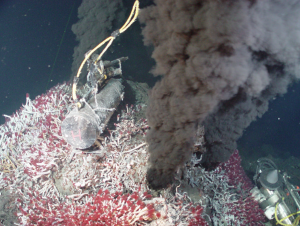
Chris Reinhard, School of Earth and Atmospheric Sciences associate professor, co-authors a new theory about the Earth's phosphorus cycle, which could give scientists a better chance to detect signs of life on other rocky planets in the search for habitable worlds.
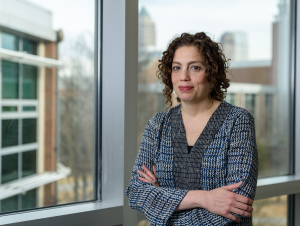
Lieberman, a professor in the School of Chemistry and Biochemistry, is the inaugural chair of the Kelly Sepcic Pfeil, Ph.D. Faculty Endowment Fund. The College of Sciences alumna-funded effort is designed to increase the number of women faculty in the School, and to help narrow the gender gap in STEM degrees and careers.

For over 30 years, Georgia Tech-Lorraine has led the European presence in Georgia Tech’s commitment to academics, research, and innovation. Now, the campus joins an extensive network of universities and industry partners throughout Europe with that same commitment.

A new cohort study, led by researchers at Emory University in collaboration with Pengfei Liu and Rodney Weber of Georgia Tech's School of Earth and Atmospheric Sciences, shows that long-term exposure to air pollution may increase the risks for developing dementia and Alzheimer’s disease.
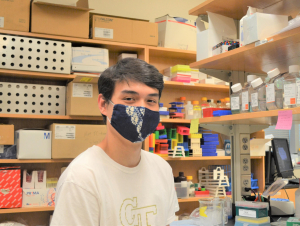
Learn about four undergrad researchers serving as catalysts for innovation and development in their respective fields — and representing Georgia Tech’s mission in developing leadership and improving the human condition.
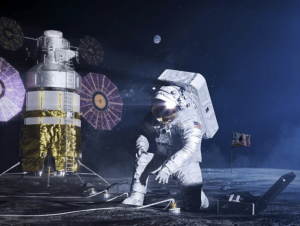
Georgia Tech points to what’s next, and how the Institute will contribute. “Discovering life beyond Earth would fundamentally change humanity’s perspective on our place in the universe,” says Earth and Atmospheric Sciences' Jennifer Glass. “Integrating astrobiology – the search of life in the universe – into space missions in order to know if and when we detect life on other planetary bodies, including exoplanets, is an exciting challenge currently underway.”
Experts In The News
Alex Robel, an associate professor in the School of Earth and Atmospheric Sciences at Georgia Tech, said pumping sand onshore is far from a perfect solution to stabilize a beach, but it’s “one of the best tools we have in our arsenal.”
“It’s been done in the United States for almost a century in different places and we know how to do it,” Robel said. “We’re good at it.”
But nourishment is only a Band-Aid for erosion. Once cities start replenishing sand, Robel said they have to keep doing it regularly.
Atlanta Journal Constitution March 24, 2026A team of researchers including David Hu, a professor in Georgia Tech’s School of Biological Sciences and George W. Woodruff School of Mechanical Engineering, have visualized mosquito flight behavior for the first time.
Based on their data, the researchers said they don’t think mosquitoes swarm because they’re following the pack. Each appeared to pick up on the cues independently, then found themselves at the same place at the same time.
“It’s like a crowded bar,” said Hu. “Customers aren’t there because they followed each other into the bar. They’re attracted by the same cues: drinks, music, and the atmosphere. The same is true of mosquitoes. Rather than following the leader, the insect follows the signals and happens to arrive at the same spot as the others. They’re good copies of each other.”
A similar story was published by The Economic Times.
ScienceDaily March 22, 2026