To request a media interview, please reach out to experts using the faculty directories for each of our six schools, or contact Jess Hunt-Ralston, College of Sciences communications director. A list of faculty experts is also available to journalists upon request.
News Center
Latest News

School of Earth and Atmospheric Sciences assistant professor Frances Rivera-Hernández will receive $700,000 over the next four years to study an ancient lake bed in Antarctica — with the hope of using samples and data to help NASA determine future landing sites for Mars missions.
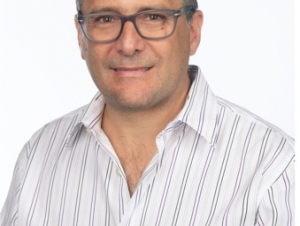
Facundo Fernandez, professor and associate chair in the School of Chemistry and Biochemistry, was recently featured in the Journal of the American Society for Mass Spectrometry. As the latest subject of the journal’s “Faces of Mass Spectrometry” series, Fernandez discusses his personal and scientific history, from his upbringing in Argentina to the pivotal role of his postdoctoral mentor to his interest in the fundamentals and applications of mass spectrometry.
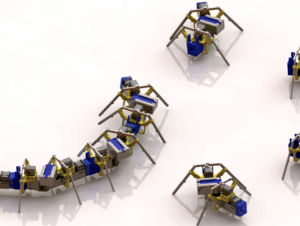
Researchers are working to develop simple, low-cost, legged robots capable of linking and unlinking to accomplish tasks, such as gap traversal, stair climbing, and object transport over uneven terrains.
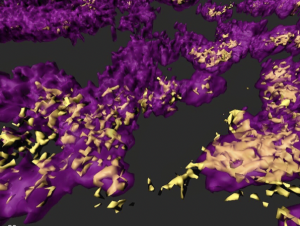
Georgia Tech’s Center for Microbial Dynamics and Infection (CMDI) merges disciplines, aggressively recruiting microbiologist ‘superstars’ to take back the high ground from antibiotic-resistant pathogens and emerging diseases — and to harness microbes to provide new medicines, cleaner environments, and solutions to the challenges of climate change.
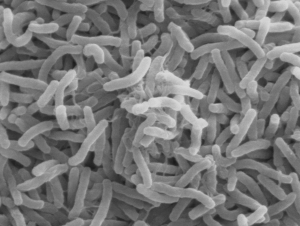
A team of interdisciplinary scientists from Georgia Tech led by Brian Hammer has found a previously unknown tool in the arsenal of cholera bacterium — a toxin that impairs a cell’s overall membrane and looks like none described prior.
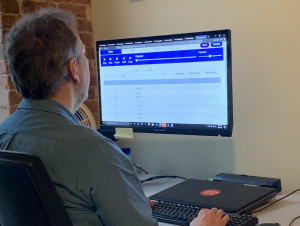
Georgia Tech researchers have created a data visualization plus sonification approach lets users explore data with visual, auditory, or both modalities.
Experts In The News
Alex Robel, an associate professor in the School of Earth and Atmospheric Sciences at Georgia Tech, said pumping sand onshore is far from a perfect solution to stabilize a beach, but it’s “one of the best tools we have in our arsenal.”
“It’s been done in the United States for almost a century in different places and we know how to do it,” Robel said. “We’re good at it.”
But nourishment is only a Band-Aid for erosion. Once cities start replenishing sand, Robel said they have to keep doing it regularly.
Atlanta Journal Constitution March 24, 2026A team of researchers including David Hu, a professor in Georgia Tech’s School of Biological Sciences and George W. Woodruff School of Mechanical Engineering, have visualized mosquito flight behavior for the first time.
Based on their data, the researchers said they don’t think mosquitoes swarm because they’re following the pack. Each appeared to pick up on the cues independently, then found themselves at the same place at the same time.
“It’s like a crowded bar,” said Hu. “Customers aren’t there because they followed each other into the bar. They’re attracted by the same cues: drinks, music, and the atmosphere. The same is true of mosquitoes. Rather than following the leader, the insect follows the signals and happens to arrive at the same spot as the others. They’re good copies of each other.”
A similar story was published by The Economic Times.
ScienceDaily March 22, 2026