To request a media interview, please reach out to experts using the faculty directories for each of our six schools, or contact Jess Hunt-Ralston, College of Sciences communications director. A list of faculty experts is also available to journalists upon request.
News Center
Latest News
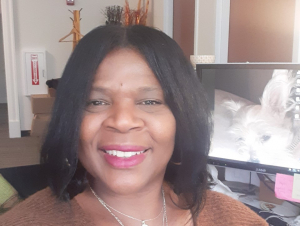
College of Sciences development assistant discusses her unique perspective, influenced by various mentors and friends, and how that perspective shapes her daily life.
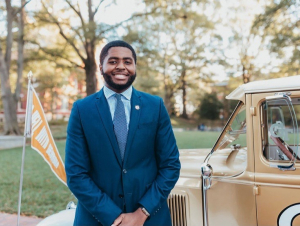
Third-year Neuroscience student discusses his involvements at Georgia Tech, career goals, and thoughts and reflections on Black History Month.

A new study reported by Georgia Tech researchers finds that an alligator heart will not fibrillate when exposed to drastic temperature changes, unlike a rabbit (mammal) heart, which is critically vulnerable to heart trauma under those conditions. The research could help better understand how the heart works and what can cause a deadly arrhythmia – which fundamentally happens when the heart doesn’t pump blood correctly any longer.
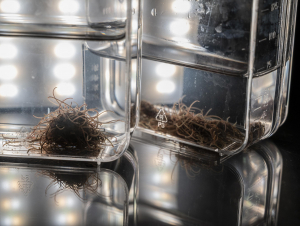
Individually, California blackworms live an unremarkable life eating microorganisms in ponds and serving as tropical fish food for aquarium enthusiasts. But together, tens, hundreds, or thousands of the centimeter-long creatures can collaborate to form a “worm blob,” a shape-shifting living liquid that collectively protects its members from drying out and helps them escape threats such as excessive heat.
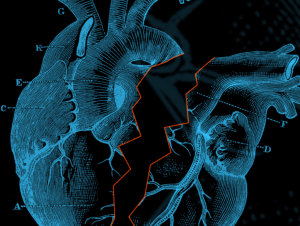
He's a physicist, but Flavio Fenton has long been fascinated by the heart, and the electrical signals that keep it pumping. Fenton recounts how he pivoted from particle physics to researching cardiac rhythms, along the way helping to provide innovations in heart sound studies.

Vinayak (Vinny) Agarwal, an assistant professor with appointments in the School of Chemistry and Biochemistry and the School of Biological Sciences, is named a 2021 Cottrell Scholar for his work on researching marine natural products. The honor helps Agarwal continue his marine research while developing related new curricula for undergraduates.
Experts In The News
Alex Robel, an associate professor in the School of Earth and Atmospheric Sciences at Georgia Tech, said pumping sand onshore is far from a perfect solution to stabilize a beach, but it’s “one of the best tools we have in our arsenal.”
“It’s been done in the United States for almost a century in different places and we know how to do it,” Robel said. “We’re good at it.”
But nourishment is only a Band-Aid for erosion. Once cities start replenishing sand, Robel said they have to keep doing it regularly.
Atlanta Journal Constitution March 24, 2026A team of researchers including David Hu, a professor in Georgia Tech’s School of Biological Sciences and George W. Woodruff School of Mechanical Engineering, have visualized mosquito flight behavior for the first time.
Based on their data, the researchers said they don’t think mosquitoes swarm because they’re following the pack. Each appeared to pick up on the cues independently, then found themselves at the same place at the same time.
“It’s like a crowded bar,” said Hu. “Customers aren’t there because they followed each other into the bar. They’re attracted by the same cues: drinks, music, and the atmosphere. The same is true of mosquitoes. Rather than following the leader, the insect follows the signals and happens to arrive at the same spot as the others. They’re good copies of each other.”
A similar story was published by The Economic Times.
ScienceDaily March 22, 2026