To request a media interview, please reach out to experts using the faculty directories for each of our six schools, or contact Jess Hunt-Ralston, College of Sciences communications director. A list of faculty experts is also available to journalists upon request.
News Center
Latest News
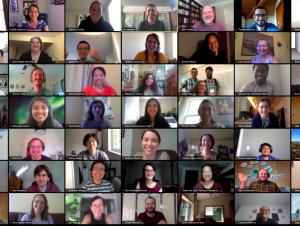
From talks on math and equity, to virtual tea time and Vinyasa yoga, Margalit shares lessons and successes from this year's remote "Topology and Geometry Workshop" as a way for faculty, students, and mentors to successfully create and cultivate meaningful communities and connections.
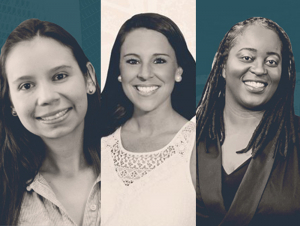
Kathryn Lanier (PhD Chem 17), Maria Soto-Giron (PhD BI 18), and Nseabasi Ufot (Psy 02) are included in a new program designed to recognize the achievements of young Georgia Institute of Technology alumni who are improving the human condition.

Felix Herrmann is the recipient of the 2020 Reginald Fessenden Award, presented by the Society of Exploration Geophysicists (SEG). He is receiving this award with Charles (Chuck) Mosher, of ConocoPhillips, which recognizes their pioneering work in the development and application of compressive sensing (CS) in seismology.
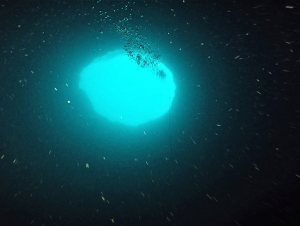
Blue holes are underwater sinkholes scattered across Florida’s Gulf continental shelf. They vary in size, shape and depth, but most are diverse ecological hot spots. In May and September 2019, a team of scientists including School of Biological Sciences researchers explored one blue hole, dubbed “Amberjack Hole" near Sarasota. Soon, a second, deeper location, "Green Banana", will be explored.

A new statistical study may help dispel lingering doubts about whether to be concerned that people without Covid-19 symptoms are spreading the disease. The asymptomatic spread of the coronavirus is likely both common and significant, authors of a new study said.
Multistage platform combines nanoparticles and programmable chemistry in transformative approach
Experts In The News
In December, The Conversation hosted a webinar on AI’s revolutionary role in drug discovery and development. Science and technology editor Eric Smalley interviewed Jeffrey Skolnick, Regents' Professor and eminent scholar in computational systems biology at Georgia Institute of Technology, and Benjamin P. Brown, assistant professor of pharmacology at Vanderbilt University. Skolnick has developed AI-based approaches to predict protein structure and function that may help with drug discovery and finding off-label uses of existing drugs. Brown’s lab works on creating new computer models that make drug discovery faster and more reliable.
The Conversation April 7, 2026While it often gets written off as being distracted or not paying attention, daydreaming is actually a sign of an active and imaginative mind. In fact, a 2017 study found that daydreamers are generally smarter than their focused peers. “People with efficient brains may have too much brain capacity to stop their minds from wandering,” said Eric Schumacher, the Georgia Tech psychology professor who co-authored the study.
People who daydream frequently have things running through their heads, whether they are thinking through ideas or picturing possible outcomes. Letting the mind wander allows unexpected connections to form. To an outside observer, they may seem checked out of reality. However, other highly intellectual people know that they're truly deeply engaged, just not with what's going on right in front of them.
Your Tango April 4, 2026