To request a media interview, please reach out to experts using the faculty directories for each of our six schools, or contact Jess Hunt-Ralston, College of Sciences communications director. A list of faculty experts is also available to journalists upon request.
News Center
Latest News
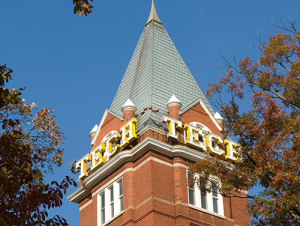
Fifth cohort includes four College of Sciences faculty: David Ballantyne, Facundo Fernandez, Brian Hammer, and Jake Soper.
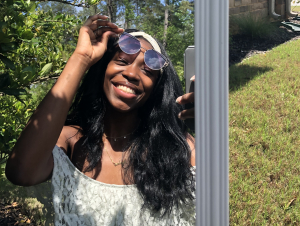
The fifth-year neuroscience major is taking advantage of this summer’s unique circumstances to spend extra time with her family and work on her social media brand.
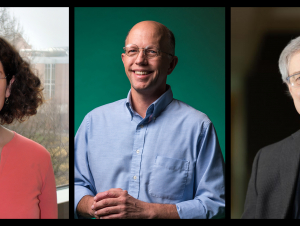
New research from Center for Chemical Evolution experimentally evaluates alternative model to ‘RNA World’ hypothesis, emphasizing collaboration and co-evolution
Held this summer in a virtual format, the fourth annual Quantitative Biosciences “Hands-On Modeling Workshop” focused on the basics of epidemics modeling. Joshua Weitz and Pablo Bravo share thoughts on how they ran the virtual workshop — along with ideas and advice for those looking to host similar online events.

For two years, a team of researchers led by Kim Cobb have been working in flood-vulnerable Savannah and Chatham County to improve emergency response and preparedness in a coastal region whose past, present, and future are inextricably linked to water.

Teams led by School of Physics' Chandra Raman and University of Trento have independently created magnetic solitons in a Bose-Einstein condensate, made from atoms with different spins. The experiments establish a new playground for exploring quantum solitons.
Experts In The News
In December, The Conversation hosted a webinar on AI’s revolutionary role in drug discovery and development. Science and technology editor Eric Smalley interviewed Jeffrey Skolnick, Regents' Professor and eminent scholar in computational systems biology at Georgia Institute of Technology, and Benjamin P. Brown, assistant professor of pharmacology at Vanderbilt University. Skolnick has developed AI-based approaches to predict protein structure and function that may help with drug discovery and finding off-label uses of existing drugs. Brown’s lab works on creating new computer models that make drug discovery faster and more reliable.
The Conversation April 7, 2026While it often gets written off as being distracted or not paying attention, daydreaming is actually a sign of an active and imaginative mind. In fact, a 2017 study found that daydreamers are generally smarter than their focused peers. “People with efficient brains may have too much brain capacity to stop their minds from wandering,” said Eric Schumacher, the Georgia Tech psychology professor who co-authored the study.
People who daydream frequently have things running through their heads, whether they are thinking through ideas or picturing possible outcomes. Letting the mind wander allows unexpected connections to form. To an outside observer, they may seem checked out of reality. However, other highly intellectual people know that they're truly deeply engaged, just not with what's going on right in front of them.
Your Tango April 4, 2026