To request a media interview, please reach out to experts using the faculty directories for each of our six schools, or contact Jess Hunt-Ralston, College of Sciences communications director. A list of faculty experts is also available to journalists upon request.
News Center
Latest News
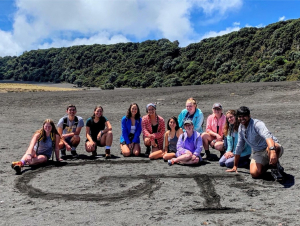
In just five weeks, we interviewed a former vice president of Costa Rica, scrambled up the slopes of a volcano, and came face to face with sloths, vipers, and bullet ants. The Nature, Governance, and Sustainability in Costa Rica (NGS-CR) Study-Abroad Program has been an unbelievable experience. From the remote jungles of Sarapiqui to the stunning peaks of Monteverde, Costa Rica has inspired us to explore and learn at every turn.
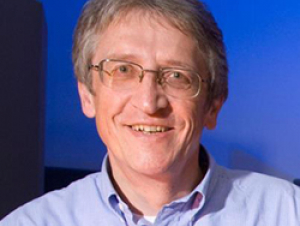
The Alexander von Humboldt Foundation has selected Jean-Luc Bredas to receive a Humboldt Research Award. The honor recognizes a researcher’s entire achievements to date. Recipients are academics whose fundamental discoveries, theories, or insights have had a significant impact on their own discipline and who are expected to continue producing cutting-edge achievements in the future.
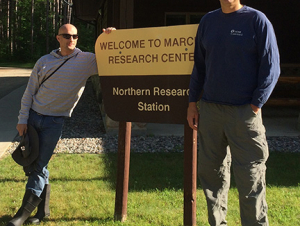
It is a fact that climate is changing, but how much and how fast are the subject of debate. Georgia Tech researchers are attempting to answer these questions for peatlands, a freshwater wetland ecosystem. Their recent work indicates that warming of peatlands increases microbial production of greenhouse gases, releases more methane than carbon dioxide, reduces microbial diversity, and alters the composition of microbial communities in peat soils.
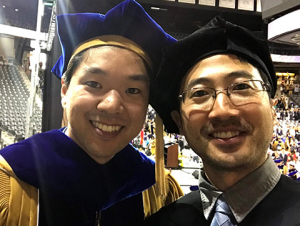
Puzzling results of a recent study of short DNA sequences by Harold Kim and former graduate student Jiyoun Jeong could pave the way to properly identifying the sequence dependence of rigidity and flexibility in DNA.
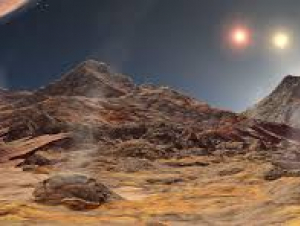
Scientists may need to rethink their estimates for how many planets outside our solar system could host a rich diversity of life in light of the discovery that a buildup of toxic gases in the atmospheres of most planets makes them unfit for complex life as we know it.
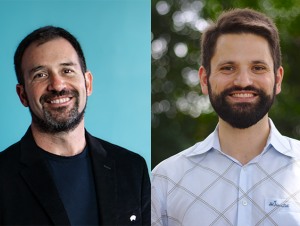
The journal Research in the Mathematical Sciences has selected a paper coauthored by Georgia Tech mathematicians Matthew Baker and Joseph Rabinoff as one of the inaugural recipients of its Best Article Award.
Experts In The News
Researchers have long known that when two galaxies approach each other and merge, the supermassive black holes at their centers form a pair and are eventually expected to merge as well. It is precisely these mergers that are considered one of the sources of the gravitational-wave background — a faint “hum” of spacetime detected in recent years. However, the role played by the geometry of the collision in this process has remained an open question.
Graduate student Sena Ghobadi of the Georgia Institute of Technology’s School of Physics, along with her colleagues, has developed three-dimensional dynamic models of such collisions.
A similar story appeared in Sky & Telescope.
Universe Magazine April 28, 2026Zachary Handlos, senior academic professional in the School of Earth and Atmospheric Sciences, explains how weather patterns can lead to conditions conducive to the types of wildfires currently seen in Florida and Georgia.
This piece also appeared in The Washington Post and The Conversation.
Atlanta Journal Constitution April 25, 2026