To request a media interview, please reach out to experts using the faculty directories for each of our six schools, or contact Jess Hunt-Ralston, College of Sciences communications director. A list of faculty experts is also available to journalists upon request.
News Center
Latest News

The nation needs to ramp up efforts to suck heat-trapping gases out of the air to fight climate change, a new U.S. report said. The report from the National Academy of Sciences says technology to do so has gotten better, and climate change is worsening. Christopher Jones, a professor in the School of Chemical and Biomolecular Engineering and the School of Chemistry and Biochemistry is a coauthor of the report.

A new open source decision support tool could use machine learning to analyze RNA expression -- tied to information about patient outcomes with specific drugs -- to help clinicians chose the chemotherapy drug most likely to attack the disease in individual patients.

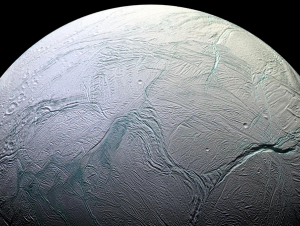
Envision a yellow submarine on a rocket to Europa as a future highpoint of a research project led by Georgia Tech to search for life in our solar system's oceans.
Experts In The News
Researchers have long known that when two galaxies approach each other and merge, the supermassive black holes at their centers form a pair and are eventually expected to merge as well. It is precisely these mergers that are considered one of the sources of the gravitational-wave background — a faint “hum” of spacetime detected in recent years. However, the role played by the geometry of the collision in this process has remained an open question.
Graduate student Sena Ghobadi of the Georgia Institute of Technology’s School of Physics, along with her colleagues, has developed three-dimensional dynamic models of such collisions.
A similar story appeared in Sky & Telescope.
Universe Magazine April 28, 2026Zachary Handlos, senior academic professional in the School of Earth and Atmospheric Sciences, explains how weather patterns can lead to conditions conducive to the types of wildfires currently seen in Florida and Georgia.
This piece also appeared in The Washington Post and The Conversation.
Atlanta Journal Constitution April 25, 2026