To request a media interview, please reach out to experts using the faculty directories for each of our six schools, or contact Jess Hunt-Ralston, College of Sciences communications director. A list of faculty experts is also available to journalists upon request.
News Center
Latest News
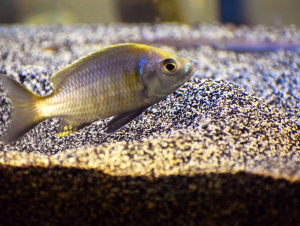
Do genes fire off signals to cause some behaviors? Science is getting closer to finding out. Researchers were able to directly match gene regulation with ritual mating behavior in fish. Their research field may give some insight into autism spectrum disorder.
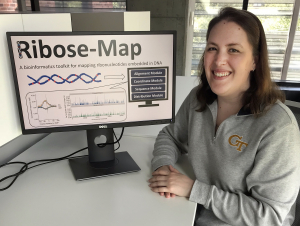
Georgia Tech researchers develop Ribose-Map, a bioinformatics toolkit to effectively analyze high-throughput sequencing data
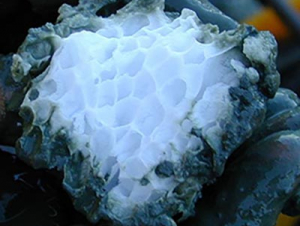
Methane clathrates, crystalline lockers for natural gas deposits deep under Earth's oceans, may also exist on icy moons of Saturn and Jupiter. An interdisciplinary team of Georgia Tech College of Sciences researchers will look into possible microbial influence on these clathrates, thanks to new NASA funding.
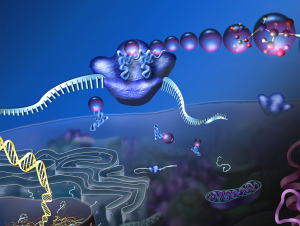
This experiment had a good chance of crashing. Instead, it delivered whopping evidence to collaborate the earliest evolution of the translational system, the mechanisms which make life out of our genes. The study swapped out all its magnesium, tabula rasa, and showed that the system would have thrived almost as it is today 4 billion years ago at the earliest foundations of life on Earth.
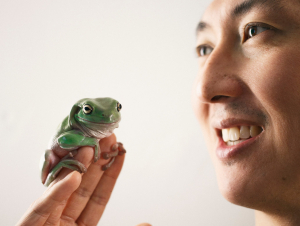
The New York Times dives into David Hu's curious world of physics and biology. Hu is an Associate Professor in the School of Biological Sciences and an adjunct Associate Professor in the School of Physics.
Experts In The News
Researchers have long known that when two galaxies approach each other and merge, the supermassive black holes at their centers form a pair and are eventually expected to merge as well. It is precisely these mergers that are considered one of the sources of the gravitational-wave background — a faint “hum” of spacetime detected in recent years. However, the role played by the geometry of the collision in this process has remained an open question.
Graduate student Sena Ghobadi of the Georgia Institute of Technology’s School of Physics, along with her colleagues, has developed three-dimensional dynamic models of such collisions.
A similar story appeared in Sky & Telescope.
Universe Magazine April 28, 2026Zachary Handlos, senior academic professional in the School of Earth and Atmospheric Sciences, explains how weather patterns can lead to conditions conducive to the types of wildfires currently seen in Florida and Georgia.
This piece also appeared in The Washington Post and The Conversation.
Atlanta Journal Constitution April 25, 2026