To request a media interview, please reach out to experts using the faculty directories for each of our six schools, or contact Jess Hunt-Ralston, College of Sciences communications director. A list of faculty experts is also available to journalists upon request.
News Center
Latest News
The first photosynthetic organisms, cyanobacteria, emerged billions of years ago, when Earth supported only anaerobic life and before life evolved mechanisms to cope with the toxic effects of reactive forms of oxygen. Abundant iron in ancient oceans exacerbated oxygen’s reactivity, making it an even stronger poison. So how did ancient cyanobacteria cope with the effects of the toxic by-product of their own metabolism?
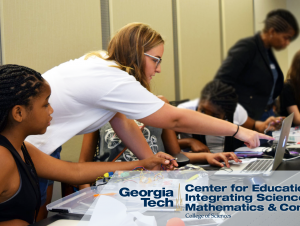
The new STEM Teacher Leadership Program promotes computer science, computation, coding and software engineering skills. The program is a joint effort of Georgia Tech and Honeywell Hometown Solutions, the company’s corporate citizenship initiative.
Marc Weissburg, of the School of Biological Sciences, has been appointed Georgia Tech’s newest Brook Byers Professor. Yuanzhi Tang, of the School of Earth and Atmospheric Sciences, is one five newly appointed Brook Byers Institute for Sustainable Systems Faculty Fellows.

Kim Cobb is selected to lead the program, which will coordinate and grow educational and research activities focused on providing solutions and creating economic opportunities at the intersection of global change, climate change, and energy.
U.S. News and World Report continues to rank Georgia Tech's graduate programs among nation's best.
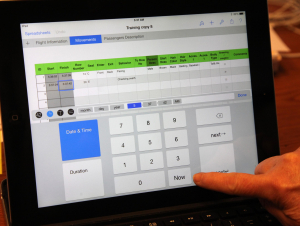
A recent study conducted by researchers from Emory University and Georgia Tech found that an infectious passenger with influenza or other droplet-transmitted respiratory infection will most likely not transmit infection to passengers seated farther away than two seats laterally and one row in front or back on an aircraft. The study was designed to assess rates and routes of possible infectious disease transmission during flights.
Experts In The News
Researchers have long known that when two galaxies approach each other and merge, the supermassive black holes at their centers form a pair and are eventually expected to merge as well. It is precisely these mergers that are considered one of the sources of the gravitational-wave background — a faint “hum” of spacetime detected in recent years. However, the role played by the geometry of the collision in this process has remained an open question.
Graduate student Sena Ghobadi of the Georgia Institute of Technology’s School of Physics, along with her colleagues, has developed three-dimensional dynamic models of such collisions.
A similar story appeared in Sky & Telescope.
Universe Magazine April 28, 2026Zachary Handlos, senior academic professional in the School of Earth and Atmospheric Sciences, explains how weather patterns can lead to conditions conducive to the types of wildfires currently seen in Florida and Georgia.
This piece also appeared in The Washington Post and The Conversation.
Atlanta Journal Constitution April 25, 2026