To request a media interview, please reach out to experts using the faculty directories for each of our six schools, or contact Jess Hunt-Ralston, College of Sciences communications director. A list of faculty experts is also available to journalists upon request.
News Center
Latest News

College of Sciences staff and faculty who are leading the Institute's Covid-19 response, a key School of Biological Sciences academic support specialist, and a team of cybersecurity pros are the winners of new One Small Step, Spirit of Georgia Tech, and One Giant Leap Awards presented by Georgia Tech Human Resources.
Seven faculty members from five schools in the College of Sciences are among those honored with annual Spring awards from Georgia Tech's Center for Teaching and Learning that celebrate innovation in teaching.
Eight School of Psychology graduate students and early career scientists are recognized for stellar classroom, teaching, and research achievements in 2020-2021.
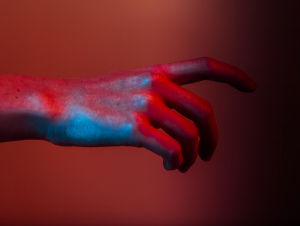
Itch sensations that strike glabrous skin — like that found on the palms of the hands or soles of the feet — can be the source of lasting discomfort for many people. But a new study from School of Biological Sciences researchers may bring eventual relief, thanks to findings that may narrow down the unique glabrous skin receptors that respond to those itches.
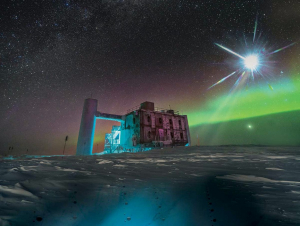
School of Physics professor Ignacio Taboada officially begins his term as the next spokesperson for the IceCube Neutrino Observatory — an NSF-funded South Pole facility searching deep space for sources of high-energy neutrinos — on May 1, 2021. Taboada recently joined outgoing spokesperson Darren Grant for a Q&A about IceCube’s progress and plans.
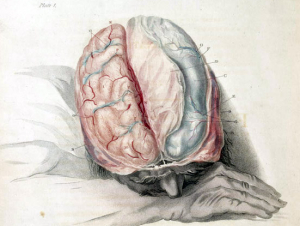
It's one of the most important processes for the development of the human brain, but science is still learning about DNA methylation. A School of Biological Sciences professor and her research team have uncovered some new information about how this process evolved in humans.
Experts In The News
Alex Robel, an associate professor in the School of Earth and Atmospheric Sciences at Georgia Tech, said pumping sand onshore is far from a perfect solution to stabilize a beach, but it’s “one of the best tools we have in our arsenal.”
“It’s been done in the United States for almost a century in different places and we know how to do it,” Robel said. “We’re good at it.”
But nourishment is only a Band-Aid for erosion. Once cities start replenishing sand, Robel said they have to keep doing it regularly.
Atlanta Journal Constitution March 24, 2026A team of researchers including David Hu, a professor in Georgia Tech’s School of Biological Sciences and George W. Woodruff School of Mechanical Engineering, have visualized mosquito flight behavior for the first time.
Based on their data, the researchers said they don’t think mosquitoes swarm because they’re following the pack. Each appeared to pick up on the cues independently, then found themselves at the same place at the same time.
“It’s like a crowded bar,” said Hu. “Customers aren’t there because they followed each other into the bar. They’re attracted by the same cues: drinks, music, and the atmosphere. The same is true of mosquitoes. Rather than following the leader, the insect follows the signals and happens to arrive at the same spot as the others. They’re good copies of each other.”
A similar story was published by The Economic Times.
ScienceDaily March 22, 2026