To request a media interview, please reach out to experts using the faculty directories for each of our six schools, or contact Jess Hunt-Ralston, College of Sciences communications director. A list of faculty experts is also available to journalists upon request.
News Center
Latest News
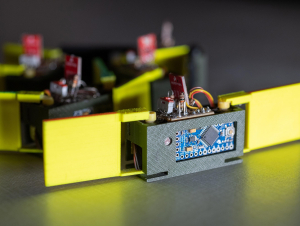
Building conventional robots typically requires carefully combining components like motors, batteries, actuators, body segments, legs and wheels. Now, researchers have taken a new approach, building a robot entirely from smaller robots known as “smarticles” to unlock the principles of a potentially new locomotion technique.
Multicellular life is one of the most astonishing wonders on Earth, but why and how does it arise in the first place, and at what cost? To help answer these questions, we exposed single-celled algae to predators and watched them evolve into multicellular life. Within a year, they had formed groups of cells to avoid being eaten - but at a price.

John Reynolds has been named a 2020 Arthur C. Cope Scholar by the American Chemical Society. The award recognizes his pioneering work in the design and synthesis of pi-conjugated molecules, oligomers, and polymers with targeted properties for advanced organic electronic applications.
Season 3 of the College of Sciences podcast ScienceMatters debuts with a look at the neuroscience behind daydreaming and suspenseful movies. Other subjects in the 10-episode season include the latest research on climate science, the search for extraterrestrial life, and what microbiology teaches us about the early Earth.
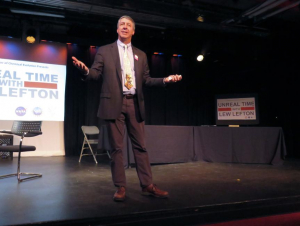
As a child in New Mexico, Lew Lefton, Georgia Tech associate vice president for research computing, had two passions, math and comedy. Until sixth grade, he never understood mathematics could be a career, figuring mathematicians were akin to blacksmiths, useful in the past, but not relevant today.
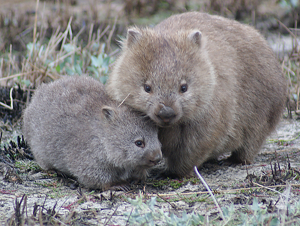
How wombats produce the distinctively shaped poop has been of interest to the research teams of Georgia Tech mechanical engineering professor David Hu and Scott Carver, a lecturer in wildlife ecology in University of Tasmania, Australia. Wombats are poised to gain acclaim, because Hu, Carver, and their coworkers just received a 2019 Ig Nobel Prize, awarded by Improbable Research for research that initially makes people laugh and then think.
Experts In The News
Researchers have long known that when two galaxies approach each other and merge, the supermassive black holes at their centers form a pair and are eventually expected to merge as well. It is precisely these mergers that are considered one of the sources of the gravitational-wave background — a faint “hum” of spacetime detected in recent years. However, the role played by the geometry of the collision in this process has remained an open question.
Graduate student Sena Ghobadi of the Georgia Institute of Technology’s School of Physics, along with her colleagues, has developed three-dimensional dynamic models of such collisions.
A similar story appeared in Sky & Telescope.
Universe Magazine April 28, 2026Zachary Handlos, senior academic professional in the School of Earth and Atmospheric Sciences, explains how weather patterns can lead to conditions conducive to the types of wildfires currently seen in Florida and Georgia.
This piece also appeared in The Washington Post and The Conversation.
Atlanta Journal Constitution April 25, 2026