To request a media interview, please reach out to experts using the faculty directories for each of our six schools, or contact Jess Hunt-Ralston, College of Sciences communications director. A list of faculty experts is also available to journalists upon request.
News Center
Latest News
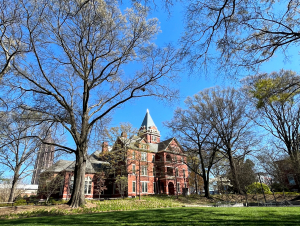
Created in partnership with the College’s new Science for Georgia’s Tomorrow initiative, Rising Tide will welcome seven researchers for two-year fellowships that are focused on faculty mentoring and skills development to apply for competitive faculty positions.
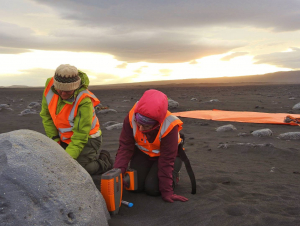
The volcanic deserts in Iceland, covered in fine ash and basalt mountains, resemble Mars' landscape. Researchers use this environment to study how planets might sustain life and what tools humans would need for habitation. Georgia Tech researchers also explore various terrains in the U.S. to better understand space and life on Earth.
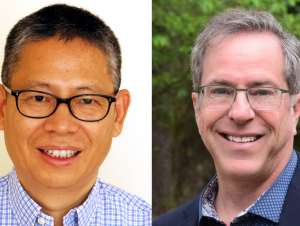
Researchers honored for their innovations in AI speech processing and nanomaterials for medicine and electronics.
An interdisciplinary initiative between the Scheller College of Business, School of Industrial and Systems Engineering, and the School of Mathematics, M.S. QCF has been ranked No. 8 in the nation among the 2025 QuantNet Best Financial Engineering Programs.

Artificial intelligence holds the power to amplify human creativity and aspirations, turning ideas into realities we once thought impossible. Meet the Georgia Tech experts charting a path forward at NeurIPS 2024.

The College of Sciences has launched Georgia Tech for Georgia’s Tomorrow, a new center focused on improving the lives of Georgians and their communities. The center will leverage research and teaching to address critical health and climate challenges across the state.
Experts In The News
Researchers have long known that when two galaxies approach each other and merge, the supermassive black holes at their centers form a pair and are eventually expected to merge as well. It is precisely these mergers that are considered one of the sources of the gravitational-wave background — a faint “hum” of spacetime detected in recent years. However, the role played by the geometry of the collision in this process has remained an open question.
Graduate student Sena Ghobadi of the Georgia Institute of Technology’s School of Physics, along with her colleagues, has developed three-dimensional dynamic models of such collisions.
A similar story appeared in Sky & Telescope.
Universe Magazine April 28, 2026Zachary Handlos, senior academic professional in the School of Earth and Atmospheric Sciences, explains how weather patterns can lead to conditions conducive to the types of wildfires currently seen in Florida and Georgia.
This piece also appeared in The Washington Post and The Conversation.
Atlanta Journal Constitution April 25, 2026