To request a media interview, please reach out to experts using the faculty directories for each of our six schools, or contact Jess Hunt-Ralston, College of Sciences communications director. A list of faculty experts is also available to journalists upon request.
News Center
Latest News
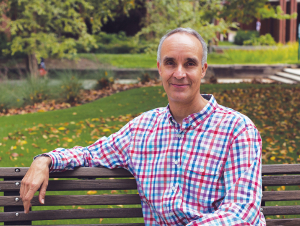
Michael Schatz, School of Physics interim chair and professor, wins his second award of the year for online education, receiving a statewide honor from the University System of Georgia for his work and new ideas on remote education.
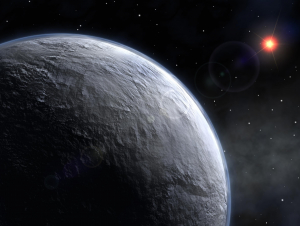
School of Earth and Atmospheric Sciences Associate Professor Chris Reinhard is ending 2020 with two research successes: A grant from NASA that allows him and Georgia Tech to join the agency's new astrobiology initiative, and he's the co-author of a new study on Earth's oceanic "biological pump" published in Nature Geosciences.
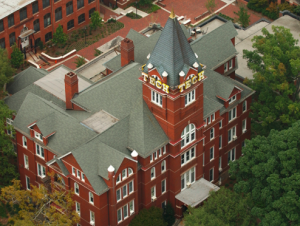
The Graduate Record Examination will not be required for fall 2021 application into any College of Sciences graduate program. Additionally, three Sciences schools and two graduate programs have opted to permanently #GRExit — no longer requiring the exam for application and admission.
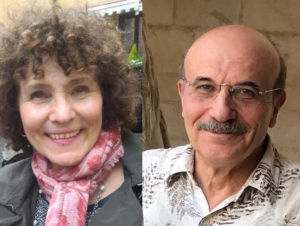
After devoting almost 35 years to the field of bioinformatics, Mark Borodovsky, a Regents Professor and director of the Center for Bioinformatics and Computational Genomics, and his wife, Nadia Boguslavsky, a research scientist who recently retired after 25 years at Georgia Tech, are launching an Endowment for the Prize for Excellence in Bioinformatics. Open to Ph.D. students, the prize will both recognize and encourage successful research in bioinformatics at Tech.

As the College's Financial Manager, she has worked under four Deans, four Financial Directors and adapted to three financial systems. After 31 years of service she is retiring.

Researchers have applied the concepts behind the ancient Japanese paper-folding art of origami to various scientific disciplines. Now School of Physics' David Zeb Rocklin and his team may have found some new ways to incorporate the folding techniques to "metamaterials."
Experts In The News
Alex Robel, an associate professor in the School of Earth and Atmospheric Sciences at Georgia Tech, said pumping sand onshore is far from a perfect solution to stabilize a beach, but it’s “one of the best tools we have in our arsenal.”
“It’s been done in the United States for almost a century in different places and we know how to do it,” Robel said. “We’re good at it.”
But nourishment is only a Band-Aid for erosion. Once cities start replenishing sand, Robel said they have to keep doing it regularly.
Atlanta Journal Constitution March 24, 2026A team of researchers including David Hu, a professor in Georgia Tech’s School of Biological Sciences and George W. Woodruff School of Mechanical Engineering, have visualized mosquito flight behavior for the first time.
Based on their data, the researchers said they don’t think mosquitoes swarm because they’re following the pack. Each appeared to pick up on the cues independently, then found themselves at the same place at the same time.
“It’s like a crowded bar,” said Hu. “Customers aren’t there because they followed each other into the bar. They’re attracted by the same cues: drinks, music, and the atmosphere. The same is true of mosquitoes. Rather than following the leader, the insect follows the signals and happens to arrive at the same spot as the others. They’re good copies of each other.”
A similar story was published by The Economic Times.
ScienceDaily March 22, 2026